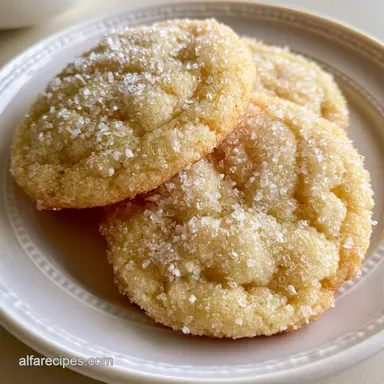
Baked Lemon Sugar Cookies with Fresh Zest
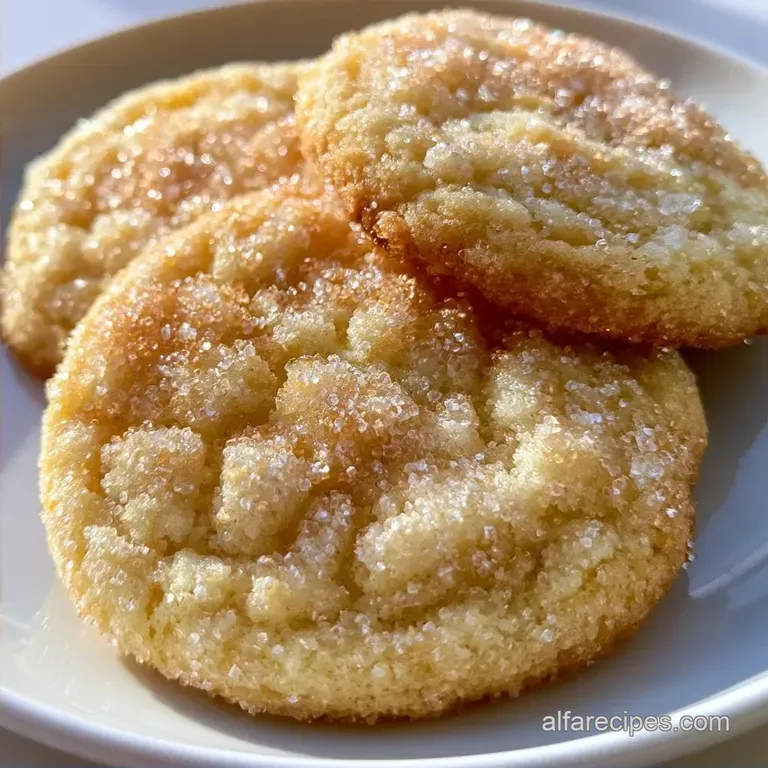
- Time: 10 min active + 11 min bake
- Flavor/Texture Hook: Tangy lemon with a crisp, sugary crackle
- Perfect for: Spring parties, tea time, or beginner bakers
- Why These Cookies Work
- Precise Recipe Specifications
- The Essential Ingredient List
- Tools for the Job
- Detailed Baking Process
- Fixing Common Cookie Issues
- Variations and Flavor Twists
- Adjusting the Batch Size
- Cookie Baking Myths
- Storage and Zero Waste
- Best Pairing Suggestions
- Recipe FAQs
- 📝 Recipe Card
The smell of fresh lemon zest hitting softened butter is a specific kind of magic. It's bright, sharp, and immediately tells your brain that something refreshing is happening in the kitchen. Most people think you need to chill cookie dough for 24 hours to get a good texture, but that's a myth.
If your ratios are precise and your butter temperature is correct, you can go from bowl to oven in minutes.
I used to think the "perfect" cookie required some mysterious aging process. Then I started looking at the actual chemistry of fats and sugars. You don't need a day of waiting if you manage the aeration of your butter correctly.
These Baked Lemon Sugar Cookies aren't about guesswork. They're about using specific weights and temperatures to ensure the cookies don't spread into flat pancakes or turn into dry biscuits. Here is how to get it right every single time.
Why These Cookies Work
The success of this bake comes down to how we handle the leavening and the fats.
Acid Base Reaction: The citric acid in the lemon juice reacts with the baking soda. This creates carbon dioxide bubbles that lift the dough, preventing it from becoming a dense disk.
Butter Aeration: Beating the butter and sugar creates a structure of tiny air pockets. This is what gives the cookies their lightness, provided you don't over mix once the flour goes in.
Sugar Coating: Rolling the dough in granulated sugar before baking creates a barrier. This ensures the edges crisp up while the center stays soft. For more tips on how flour proteins affect structure, King Arthur Baking provides great data on gluten development.
| Choice | Result | Effort | Impact |
|---|---|---|---|
| Fresh Lemon | Bright, zesty, authentic | Higher | High flavor profile |
| Bottled Juice | Flat, slightly metallic | Lower | Muted citrus notes |
| Lemon Extract | Artificial, candy like | Lowest | One dimensional taste |
The difference between fresh and bottled is stark because bottled juice loses the volatile oils found in the peel. Always use a real lemon if you can.
Precise Recipe Specifications
To ensure these cookies behave, we need to stick to specific metrics. Precision removes the risk of the cookies spreading too much or not enough.
Precision Checkpoints:
- Butter Weight: Exactly 225g
- Oven Temp: 175°C (350°F)
- Bake Time: 9 to 11 minutes
If you want to adjust the outcome, use this shortcut: - If you want a chewier center, pull them out at exactly 9 minutes. - If you want a crispier snap, leave them for the full 11 minutes. - If you want a more intense tartness, double the lemon zest.
The Essential Ingredient List
Using a scale is the only way to be foolproof here. Volume measurements for flour can vary by 20% depending on how you scoop.
Dough Ingredients:
- 1 cup (225g) unsalted butter, softened to room temperatureWhy this? Provides the primary structure and richness
- 1 cup (200g) granulated white sugarWhy this? Creates sweetness and crisp edges
- 1 large (50g) egg, room temperatureWhy this? Binds ingredients and adds moisture
- 2 tbsp (30ml) fresh lemon juiceWhy this? Provides acidity for the baking soda
- 1 tbsp (6g) lemon zest, finely gratedWhy this? Contains the essential aromatic oils
- 1 tsp (5ml) vanilla extractWhy this? Balances the sharp citrus notes
- 2 ½ cups (315g) all purpose flourWhy this? Provides the necessary gluten structure
- ½ tsp (3g) baking sodaWhy this? Reacts with lemon to create lift
- ¼ tsp (1.5g) saltWhy this? Enhances all other flavors
Coating and Glaze:
- ¼ cup (50g) granulated white sugar
- 1 tsp (2g) lemon zest
- ½ cup (60g) powdered sugar
- 1 tbsp (15ml) fresh lemon juice
| Original Ingredient | Substitute | Why It Works |
|---|---|---|
| All Purpose Flour | Almond Flour | gluten-free option. Note: Denser crumb, more fragile |
| Unsalted Butter | Coconut Oil (Solid) | dairy-free. Note: Adds a slight coconut flavor |
| Granulated Sugar | Coconut Sugar | Lower glycemic. Note: Darker color, caramel flavor |
Keep in mind that changing the fat source will alter the melting point of the cookie, which might lead to more spreading.
Tools for the Job
You don't need a professional kitchen, but a few specific tools make this easier. A stand mixer such as a KitchenAid is helpful, but a hand mixer works fine.
- Large mixing bowl (for the wet base)
- Medium mixing bowl (for dry ingredients)
- Baking sheets (two)
- Parchment paper (prevents sticking and ensures even browning)
- Wire cooling rack
- Fine zester or Microplane
- Cookie scoop or tablespoon
Detailed Baking Process
Follow these steps in order. The timing between mixing the wet and dry ingredients is where most people go wrong.
Phase 1: Preparing the Base
- Beat the softened butter and 1 cup of sugar on medium high speed. Continue until the mixture is pale and fluffy, usually about 3 minutes.
- Add the egg, lemon juice, lemon zest, and vanilla extract. Beat on medium speed until the batter is smooth and silky. Note: Room temperature eggs incorporate better without breaking the emulsion.
Phase 2: Folding the Flavor
- Stir together the flour, baking soda, and salt in a separate bowl.
- Turn the mixer to low and gradually add the flour mixture. Mix only until the white streaks of flour disappear. Note: Over mixing here develops too much gluten, which makes the Baked Lemon Sugar Cookies cakey instead of tender.
Phase 3: Finishing and Baking
- Mix the ¼ cup sugar and 1 tsp zest in a small bowl for the coating.
- Scoop about 1.5 tablespoons of dough and roll into 1 inch balls. Roll each ball in the lemon sugar until evenly coated.
- Place balls 2 inches apart on a parchment lined sheet.
- Bake at 175°C (350°F) for 9–11 minutes until the edges are set and barely golden.
- Remove from the oven and let them cool on the sheet for 5 minutes before moving to a rack.
If you're making these for a party, they pair well with a light dessert like cheesecake cups.
Fixing Common Cookie Issues
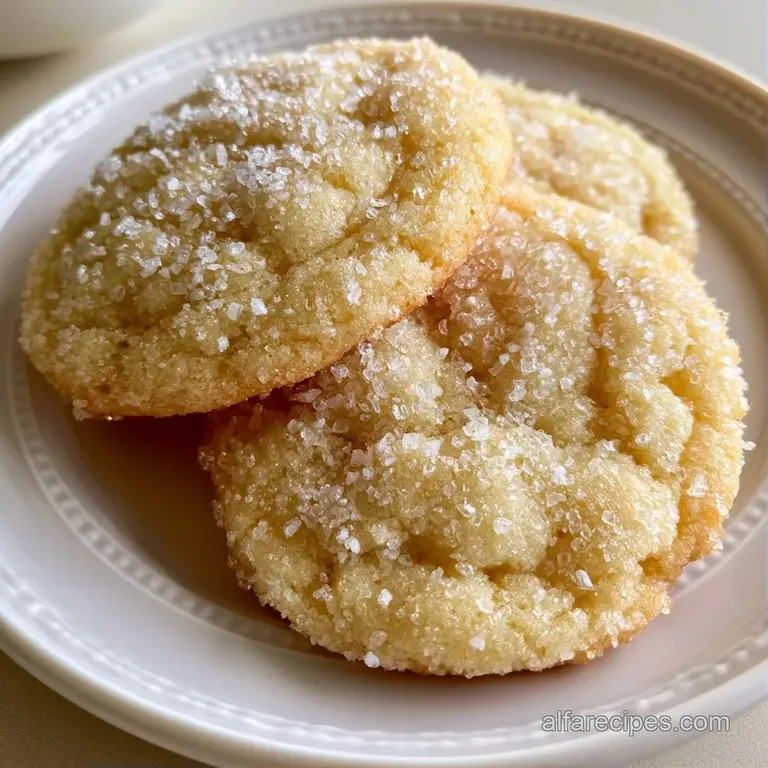
Most failures in this recipe happen because of temperature or mixing errors.
Why Your Cookies Spread
If your cookies turn into flat discs, the butter was likely too soft or the oven wasn't preheated. When butter is too warm, it melts before the flour structure can set.
To Fix a Cakey Texture
Cakey cookies usually result from adding too much flour or over beating the dough after the flour is added. This creates a bread like structure instead of a cookie snap.
To Avoid Burnt Bottoms
Dark bottoms happen when using dark colored baking sheets or omitting parchment paper. The metal absorbs more heat and scorches the sugars.
| Problem | Root Cause | Solution |
|---|---|---|
| Flat Cookies | Butter too warm | Chill dough for 30 mins |
| Cakey Texture | Over mixing | Mix flour on low speed only |
| Burnt Bottoms | Hot pan/No paper | Use parchment or silicone mats |
Variations and Flavor Twists
Once you have the base down, you can tweak the profile. This recipe is a great foundation for other citrus flavors.
For a Poppyseed Twist
Fold 1 tablespoon of poppyseeds into the flour mixture. The crunch of the seeds complements the tart lemon perfectly.
For a Vegan Version
Use a high-quality vegan butter stick and a flax egg (1 tbsp ground flax + 3 tbsp water). Note that the lift will be slightly lower due to the difference in protein structure.
For Maximum Citrus Intensity
Substitute half of the lemon juice with a high-quality lemon oil or increase the zest to 2 tablespoons. This intensifies the aroma without adding too much liquid.
If you're looking for something more formal, this flavor profile works great as a pairing for a graduation cake.
Adjusting the Batch Size
Scaling baking recipes isn't always a straight line because leavening agents don't always scale linearly.
Scaling Down (Half Batch): Use 112g of butter and 100g of sugar. Since you can't easily halve a large egg, beat one egg in a small bowl and use exactly 25g of the mixture. Reduce bake time by about 1-2 minutes.
Scaling Up (Double Batch): Increase the butter and flour exactly. However, only increase the salt and baking soda to 1.5x. Too much leavening in a large batch can cause the cookies to rise and then collapse. Work in batches on your baking sheets to avoid crowding the oven, which drops the temperature.
Cookie Baking Myths
There are a few common beliefs that actually hinder your results.
Myth: Searing the butter adds flavor. While brown butter is great for chocolate chip cookies, it ruins the bright, fresh profile of these lemon cookies. Stick to softened, unsalted butter.
Myth: You must use "self rising" flour for lift. Self rising flour has a fixed ratio of leavening. By using all purpose flour and adding our own baking soda, we can precisely control the reaction with the lemon juice.
Storage and Zero Waste
To keep the Baked Lemon Sugar Cookies fresh, store them in an airtight container at room temperature for up to 5 days. Avoid the fridge, as the humidity can make the sugar coating dissolve and become sticky.
Freezing: You can freeze the rolled dough balls before baking. Freeze them on a tray for 2 hours, then move them to a freezer bag. Bake from frozen, adding 2 minutes to the cook time. They stay good for 3 months.
Zero Waste Tips: Don't throw away the lemon rinds after zesting. You can place them in a jar with white vinegar for two weeks to create a powerful, natural kitchen cleaner. Alternatively, freeze the rinds to use in future infusions or teas.
Best Pairing Suggestions
These cookies are tart and sweet, so they need something to balance the acidity.
A cold glass of almond milk or a hot Earl Grey tea works best. The bergamot in Earl Grey echoes the citrus in the cookies. If you're serving these at a brunch, pair them with fresh berries and a light whipped cream.
Because these are so bright, they also work as a palate cleanser after a heavier dessert. Just make sure they've cooled completely so the sugar crust is fully set. Trust me, the wait is worth it for that specific snap.
Recipe FAQs
How to bake lemon sugar cookies?
Beat softened butter and sugar until fluffy, then blend in wet ingredients and dry ingredients. Roll the dough into 1 inch balls, coat them in lemon sugar, and bake at 350°F (175°C) for 9 11 minutes.
What happens if you add lemon juice to cookie dough?
It adds a bright, acidic tang and alters the dough's chemistry. The acidity reacts with the baking soda to create a softer crumb and a slight lift in the cookies.
How to freeze the dough for later?
Freeze rolled dough balls on a tray for 2 hours before moving them to a freezer bag. You can bake them directly from frozen by adding 2 minutes to the standard cook time.
Can I store these cookies in the refrigerator?
No, avoid the fridge. The humidity in the refrigerator can cause the lemon sugar coating to dissolve and become sticky.
Is it true that baking from frozen requires a different oven temperature?
No, this is a common misconception. Keep the oven at 350°F (175°C) and simply extend the baking time by 2 minutes to ensure the centers are set.
How to get the best texture for these cookies?
Mix the flour mixture only until the white streaks disappear. Overmixing develops too much gluten, which makes the cookies tough. If you enjoyed mastering dough handling here, see how the same principle works in our white bread.
Why did my cookies spread too much?
Ensure your butter is softened but not melted. If the butter is too warm when you start beating it with the sugar, the dough will lack the structure needed to hold its shape in the oven.
Baked Lemon Sugar Cookies