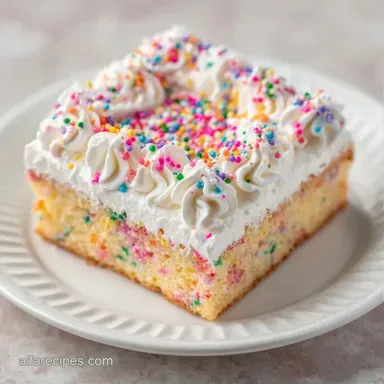
Classic Graduation Sheet Cake: Tender and Buttery
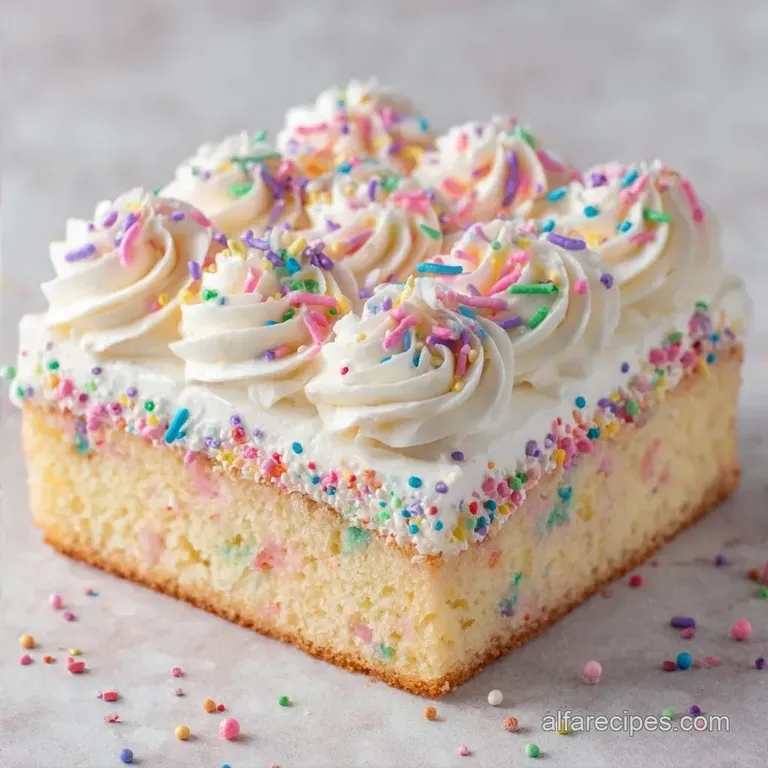
- Time: 30 min active + 25 min baking
- Flavor/Texture Hook: Buttery, tender crumb with a hit of vanilla bean
- Perfect for: Large crowds, parties, and celebratory gatherings
- Classic Graduation Sheet Cake Guide
- Why This Cake Stays Level
- What Each Ingredient Does
- The Necessary Pantry List
- Gear for the Job
- Making the Cake Step-by-Step
- Fixing Common Cake Issues
- Other Flavor Ideas
- Scaling the Recipe
- Common Baking Beliefs
- Keeping Slices Fresh
- Complete the Celebration Table
- Recipe FAQs
- 📝 Recipe Card
Nothing kills a party mood faster than a cake that feels like a sponge from the bottom of a sink. I've seen too many people overwork their batter, resulting in a rubbery, tough texture that resists the fork. It's a common trap when you're rushing to feed twenty people.
The fix is all in the mixing. By alternating the dry ingredients with buttermilk and folding in the sprinkles by hand, you avoid developing too much gluten. This keeps the crumb tender and the top flat.
We're making a Classic Graduation Sheet Cake that actually holds its shape under heavy frosting. It's a reliable, sturdy base that won't crumble when you start cutting those precise squares for your guests.
Classic Graduation Sheet Cake Guide
To get this right, you need to treat the butter and sugar like a partnership. Most people just mix them until they're combined, but you want them pale and fluffy. That air is what gives the cake its lift without needing a million leavening agents.
The buttermilk is another non negotiable. According to USDA FoodData, the acidity in buttermilk reacts with baking powder to create a finer, more uniform crumb. This prevents those giant, uneven holes that make decorating a nightmare.
Since we're aiming for High School Graduation Sheet Cake designs, a flat surface is everything. If your cake domes in the middle, you'll spend an hour hacking it off with a serrated knife. Following the temperature and timing precisely ensures a level canvas.
Why This Cake Stays Level
- Softened Butter: Beating butter and sugar for exactly 3 minutes traps tiny air bubbles that expand evenly in the oven.
- Alternating Addition: Adding flour and buttermilk in turns keeps the batter emulsified, preventing the fat from separating and causing a sunken center.
- Hand Folding: Stirring the sprinkles with a spatula instead of a mixer prevents over mixing the flour, which keeps the cake tender.
| Method | Time | Texture | Best For |
|---|---|---|---|
| From Scratch | 55 mins | Tender and rich | Special celebrations |
| Box Mix | 40 mins | Spongy and sweet | Last minute needs |
| Pre made | 10 mins | Dense and moist | Zero prep events |
Right then, before we get into the ingredients, let's talk about the base. A from scratch cake has a depth of flavor that mixes just can't touch, especially when using vanilla bean paste. Trust me on this, the tiny black specks in the frosting make it look a lot more professional.
What Each Ingredient Does
| Ingredient | What It Does | Best Swap |
|---|---|---|
| Buttermilk | Tenderizes the crumb | Plain yogurt + 1 tsp lemon juice |
| All Purpose Flour | Provides the structure | Cake flour (for a lighter feel) |
| Baking Powder | Creates the lift | Baking soda + cream of tartar |
| Vanilla Bean Paste | Intense, floral aroma | Pure vanilla extract |
Choosing the right flour is a bit of a balancing act. I usually stick with all purpose from King Arthur Baking because the protein content is consistent. If you use a high protein bread flour by mistake, you'll end up with a cake that's more like a giant biscuit.
The Necessary Pantry List
For the Cake: 375g all purpose flour Why this? Stable structure for slicing 400g granulated sugar Why this? Classic sweetness and moisture 12g baking powder Why this? Reliable, fast lift 3g salt Why this? Balances the sugar 225g unsalted butter, softened Why this? Essential for the creaming method 200g large eggs (about 4) Why this? Binding and richness 240ml buttermilk Why this? Acid for a tender crumb 10ml vanilla extract Why this? Base aromatic layer 80g rainbow sprinkles Why this? Visual celebration
For the Vanilla Bean Buttercream: 450g unsalted butter, softened 720g powdered sugar, sifted 45ml heavy cream 10ml vanilla bean paste 1g salt 60g black sanding sugar 60g gold sanding sugar 56g melted dark chocolate (for accents)
Gear for the Job
You'll need a 9x13 inch baking pan. I highly recommend a heavy duty aluminum one, as it distributes heat more evenly than thin steel. You'll also need a stand mixer or a hand mixer, a rubber spatula, and parchment paper.
Parchment paper is the only way to guarantee the cake doesn't stick. Even if you grease the pan with butter, the sugar in the batter can caramelize and glue itself to the bottom. A simple sling of parchment makes removal a breeze.
Making the Cake step-by-step
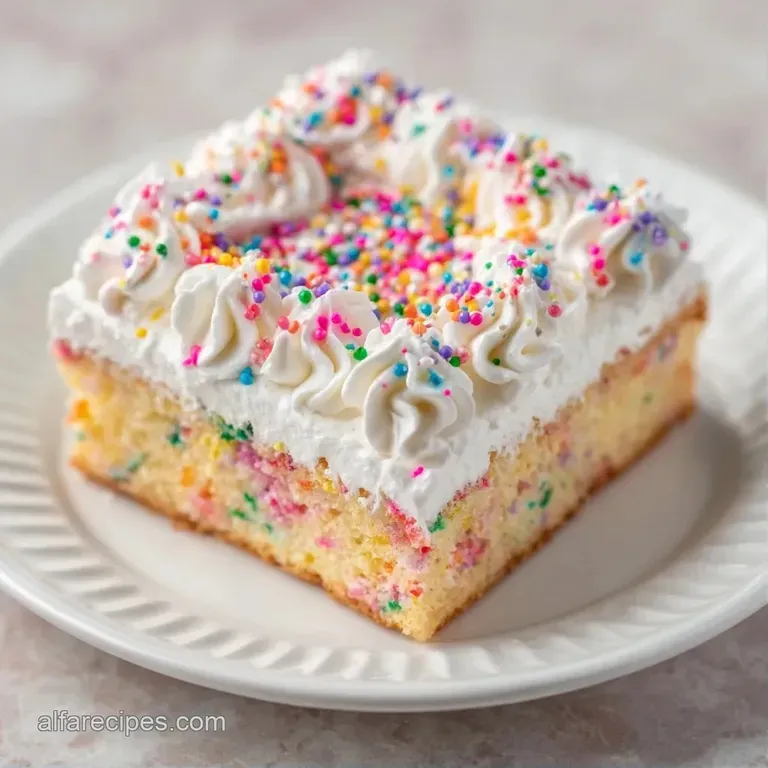
Phase 1: Prepping the Oven and Pan
- Preheat your oven to 175°C. Note: Check your oven with a thermometer if you can, as old ovens often drift.
- Grease a 9x13 inch pan with butter and line the bottom with parchment paper.
Phase 2: Mixing the Batter
- Beat the 225g softened butter and 400g sugar on medium high for 3 minutes until the mixture is pale and fluffy.
- Add eggs one at a time, beating well after each, then stir in the 10ml vanilla extract.
- Alternately add the flour mixture (375g flour, 12g baking powder, 3g salt) and 240ml buttermilk, starting and ending with the flour. Mix on low until just combined.
- Gently fold in the 80g rainbow sprinkles by hand with a spatula. Note: This prevents the colors from bleeding and the gluten from over developing.
Phase 3: The Bake and Cool
- Pour the batter into the prepared pan and bake for 25 minutes until the edges pull away slightly and a toothpick comes out clean.
- Let the cake cool in the pan for 15 minutes before transferring it to a wire rack.
Phase 4: Frosting and Graduation Designs
- Beat 450g softened butter until smooth, then slowly add 720g sifted powdered sugar.
- Mix in 45ml heavy cream, 10ml vanilla bean paste, and 1g salt until the frosting is smooth and glossy.
- Spread the frosting evenly across the cooled cake. Use a bench scraper for a flat finish.
- Use the melted dark chocolate to pipe the graduation year and the sanding sugars for accents.
Chef's Note: If your buttercream feels too soft to pipe, pop it in the fridge for 10 minutes. It's much easier to handle when it's slightly chilled.
Fixing Common Cake Issues
If you've ever had a cake that sinks in the middle, it's usually because the oven door was opened too early or the baking powder was old. The structure needs to set before the cold air hits it.
For a Sunken Center
This happens when the air bubbles collapse before the cake structure is firm. It's often caused by under baking or a temperature drop during the process.
| Problem | Root Cause | Solution |
|---|---|---|
| Sunken Middle | Oven opened too early | Keep door shut until 20 mins in |
| Raw Center | Oven temp too high | Use an oven thermometer |
| Dense Bottom | Under beaten butter | Beat butter and sugar for full 3 mins |
For "Grainy" Buttercream
Grainy frosting is usually just undissolved powdered sugar. It's not a failure, just a lack of sifting.
| Problem | Root Cause | Solution |
|---|---|---|
| Gritty Texture | Un sifted sugar | Sift sugar through a fine mesh strainer |
| Separating | Butter too cold | Gently warm bowl with a hairdryer |
| Too Sweet | Too much sugar | Add a pinch more salt or a drop of lemon |
For a Cake That Sticks
Sticking happens when the sugar in the batter bonds with the pan surface. Even greasing isn't always enough.
| Problem | Root Cause | Solution |
|---|---|---|
| Stuck Bottom | No parchment paper | Always use a parchment lining |
| Torn Edges | Removed too hot | Let cool for at least 15 minutes |
| Stuck Top | Frosting too cold | Ensure cake is 100% cool before icing |
Other Flavor Ideas
If you want to deviate from the vanilla, you can easily swap the flavor profile. For a richer chocolate twist, replace a quarter of the flour with high-quality cocoa powder and increase the buttermilk by 30ml to compensate for the dryness.
For a zesty lemon vibe, add the zest of two large lemons to the sugar before creaming. You can also replace the vanilla extract with lemon extract for a punchier taste. This makes for great Graduation Party Dessert Recipes if you're serving a lighter spring menu.
If you're looking for a different kind of treat for the table, my Chess Pie recipe is a great companion because its tartness cuts through the sweetness of the sheet cake.
Decision Shortcut
- If you want a firmer cake for transporting: Use all purpose flour and don't over mix.
- If you want a lighter, more delicate crumb: Swap 50g of all purpose flour for cake flour.
- If you want a glossier frosting: Add an extra tablespoon of heavy cream.
Scaling the Recipe
When you need to scale a Classic Graduation Sheet Cake, you can't just double everything and hope for the best. Baking is about ratios.
Scaling Down (½ Batch): Use an 8x8 inch square pan. Reduce the bake time by about 20%, checking at 18 minutes. Since you can't easily half an egg, beat one egg in a small bowl and use half of it by weight (about 25g).
Scaling Up (2x Batch): Work in batches if your mixer is small. For the bake, use two 9x13 pans rather than one giant deep pan, as the center will never cook through. Lower the oven temp to 160°C and extend the time by 5-10 minutes to ensure the larger volume cooks evenly.
Keep salt and spices to 1.5x rather than 2x to avoid overpowering the batter.
| Version | Pan Size | Temp | Bake Time |
|---|---|---|---|
| Half Batch | 8x8 inch | 175°C | 18-20 mins |
| Standard | 9x13 inch | 175°C | 25 mins |
| Double | 2x 9x13 inch | 160°C | 30-35 mins |
Avoid the temptation to just make the cake thicker in a single pan. A thick sheet cake often ends up with burnt edges and a raw middle. Stick to the surface area provided by the 9x13 pan for the best results.
Common Baking Beliefs
Some people think that you need to "cream" butter and sugar for ten minutes to get a good rise. That's not true. Over creaming can actually incorporate too much air, causing the cake to rise too fast and then collapse. Three minutes is the sweet spot.
Another myth is that you should always use room temperature eggs. While it helps with the emulsion, it's not a deal breaker. If you forgot to take them out, just put them in a bowl of warm water for five minutes.
Finally, some believe that adding extra flour prevents a cake from sticking. In reality, too much flour makes the cake dry and tough. Stick to the parchment paper method instead.
Keeping Slices Fresh
Store any leftover Classic Graduation Sheet Cake in an airtight container. If it's frosted, the fridge is the safest bet to keep the buttercream from melting, especially in the summer. It stays fresh in the fridge for up to 5 days.
For the freezer, slice the cake into squares first. Wrap each square individually in plastic wrap and place them in a freezer bag. They'll last for 3 months. To reheat, let a slice thaw in the fridge overnight, then let it sit at room temperature for 30 minutes before eating.
To avoid waste, any cake scraps that aren't pretty enough for serving can be crumbled. Mix them with a bit of cream cheese frosting and press them into mini cupcake liners for "cake pops."
Complete the Celebration Table
This cake is quite sweet, so you want to balance it with other flavors. I like to serve it alongside a fresh berry platter or a tart lemon curd. If you're planning a full menu, a savory start like my Beef Chili can provide a hearty contrast before the dessert course.
For beverages, a cold glass of milk is the standard, but a sparkling raspberry lemonade adds a nice acidic zip that cleanses the palate between bites of the rich vanilla buttercream.
When plating, use a hot knife to get those clean, sharp edges on your squares. Dip the knife in hot water, wipe it dry, and make one clean slice. Repeat for every single cut. It makes a huge difference in how the final plate looks.
Recipe FAQs
Why is my sheet cake rubbery or tough?
You likely over-mixed the batter. Overworking the flour develops too much gluten, which creates a sponge-like texture. Gently fold in the rainbow sprinkles by hand with a spatula to keep the crumb tender.
How to prevent the cake from doming in the middle?
Bake strictly at 350°F (175°C) for 25 minutes. Following the temperature and timing precisely ensures a level surface, which provides a better canvas for decorating.
Is it true that mixing butter and sugar just until combined is enough?
No, this is a common misconception. You must beat them on medium-high for approximately 3 minutes until pale and fluffy to incorporate the air necessary for the cake's lift.
How to store the cake once it is frosted?
Keep it in an airtight container in the refrigerator. This prevents the frosting from softening and maintains the freshness of the buttermilk-based cake.
How to cut perfectly clean squares for a crowd?
Use a hot, wet knife. Dip the blade in warm water and wipe it clean between every cut to avoid dragging frosting across the cake layers.
Why use vanilla bean paste in the frosting instead of liquid extract?
It provides a more intense flavor and visual appeal. The paste adds characteristic tiny black specks and a richer profile than standard vanilla extract.
What should I serve with this cake for a graduation party?
Pair it with a savory appetizer to balance the sweetness. If you enjoyed mastering the balance of textures here, see how the same precision works in our cheddar nacho sauce.
Classic Graduation Sheet Cake for 24