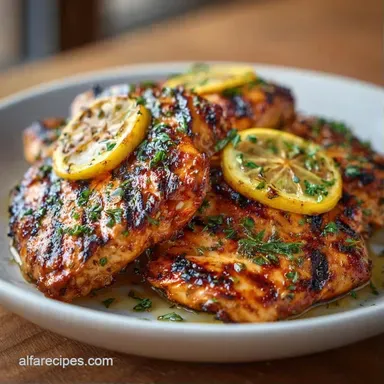
Grilled Lemon Chicken Breast: Juicy and Zesty
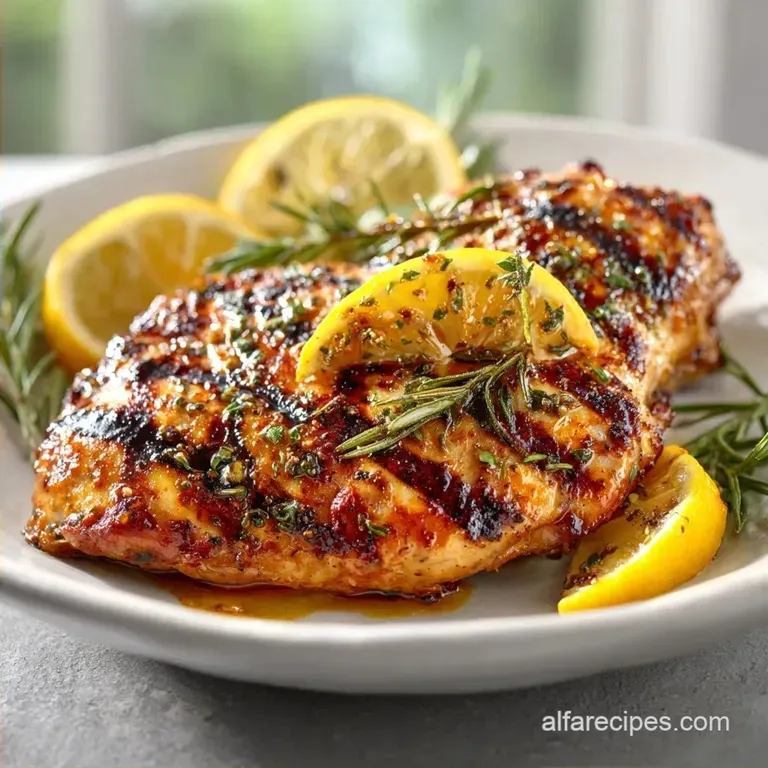
- Time: 10 min active + 15 min cook (includes 30 min marinating)
- Flavor/Texture Hook: Mahogany charred crust with a zesty, bright finish
- Perfect for: Healthy weeknight dinner or high protein meal prep
- Grilled Lemon Chicken Breast
- Why These Steps Actually Work
- Quick Recipe Specs
- The Core Ingredients
- Essential Gear List
- Step-by-Step Grilling Process
- Solving Common Grill Issues
- Troubleshooting Common Issues
- Tasty Flavor Variations
- Adjusting the Recipe Size
- Truths About Grilling Chicken
- Fresh Storage and Waste Tips
- Serving and Plating Ideas
- Recipe FAQs
- 📝 Recipe Card
That sudden sizzle when the meat hits the hot grates is the best part of the whole process. There is something about the smell of lemon zest hitting a hot grill that just screams summer, even if you're using a cast iron pan in the middle of January.
It's a clean, vibrant aroma that cuts right through the heaviness of the char.
But let's be real. Most of us have had a bad experience with this dish. You've probably ended up with chicken that's burnt on the outside but somehow still raw in the middle, or worse, that dry, rubbery texture that makes you want to reach for a gallon of water. It happens because chicken breasts are uneven.
The fat end cooks faster than the lean end, and by the time the center is safe, the edges are like cardboard.
This Grilled Lemon Chicken Breast recipe is the fix for that. I've stripped away the guesswork. We're focusing on a short, punchy marinade and a specific internal temperature. You'll get a piece of meat that's velvety on the inside and has those deep, dark grill marks we all want.
It's a budget-friendly way to get a high end result with almost no fancy gear.
Grilled Lemon Chicken Breast
The secret here isn't a magic ingredient, but how we handle the heat. Most people leave the chicken on the grill until it "looks done," but that's usually too late. By the time the outside looks perfect, the inside is often overshooting the target. We pull the meat early and let carryover cooking do the heavy lifting.
Since this is such a lean protein, it doesn't have the luxury of fat to keep it moist. That's where the olive oil and the resting phase come in. The oil creates a barrier, and the rest allows the juices to redistribute.
If you slice into it the second it leaves the grill, all that moisture just runs onto the plate, leaving you with dry meat.
Why These Steps Actually Work
I used to think marinating for 24 hours was the only way to get flavor, but with lemon, that's actually a mistake. Too much acid for too long breaks down the muscle fibers and makes the meat mushy.
- Acid Balance
- The lemon juice tenderizes the surface without turning the meat into sponges.
- Heat Shield
- Olive oil prevents the lean breast from sticking and helps conduct heat evenly.
- Carryover Cooking
- Pulling at 160°F (71°C) allows the internal temp to rise to the safe 165°F (74°C) while resting.
- Texture Uniformity
- To get that even cook, it helps to Pound the chicken so the thickest part matches the thinnest.
| Thickness | Grill Temp | Rest Time | Visual Cue |
|---|---|---|---|
| 1 inch | 400°F | 5 mins | Mahogany Crust |
| 1.5 inches | 375°F | 10 mins | Golden Brown |
| Pounded | 400°F | 5 mins | Dark Char Marks |
Quick Recipe Specs
This dish is designed for the busy cook who wants nutrition without spending two hours in the kitchen. It's a staple for my meal prep because it doesn't get "weird" when reheated if you follow the resting rules.
| Fresh Method | Shortcut Method | Impact | Savings |
|---|---|---|---|
| Fresh Lemon | Bottled Juice | Less zing | 2 mins |
| Minced Garlic | Garlic Powder | Milder taste | 3 mins |
| Outdoor Grill | Grill Pan | Smokie flavor | No fuel cost |
The Core Ingredients
I stick to simple, vibrant ingredients here. Nothing fancy, just stuff you likely have in your pantry. The goal is a bright, clean flavor that doesn't mask the taste of the chicken.
The Lineup:
- 4 pieces boneless skinless chicken breasts (approx. 1.5 lbs)Why this? Lean, high protein, and budget-friendly.
- 1/4 cup extra virgin olive oilWhy this? High smoke point and adds richness.
- 3 tbsp freshly squeezed lemon juiceWhy this? Bright acidity to cut through the char.
- 1 tbsp fresh lemon zestWhy this? This is where the "punchy" lemon flavor lives.
- 3 cloves garlic, mincedWhy this? Classic aromatic base.
- 1 tsp dried oreganoWhy this? Adds an earthy, Mediterranean vibe.
- 1 tsp kosher saltWhy this? Draws out flavor and helps the crust form.
- 1/2 tsp cracked black pepperWhy this? Subtle heat to balance the acid.
Component Analysis
| Ingredient | Science Role | Pro Secret |
|---|---|---|
| Lemon Juice | Protein Break | Keep marinating under 4 hours |
| Olive Oil | Heat Transfer | Pat dry before grilling for better sear |
| Kosher Salt | Osmosis | Salt early to season the center |
| Garlic | Flavor Depth | Mince finely to avoid burnt chunks |
Ingredient Swaps
| Original Ingredient | Substitute | Why It Works |
|---|---|---|
| Lemon Juice | Lime Juice | Similar acidity. Note: Gives a more tropical, zesty profile |
| Dried Oregano | Dried Thyme | Earthy notes. Note: Slightly sweeter than oregano |
| Olive Oil | Avocado Oil | Higher smoke point. Note: Neutral flavor, better for very high heat |
Essential Gear List
You don't need a professional kitchen for this. A few basic tools will do the job. If you're doing this indoors, a heavy cast iron grill pan is your best friend. It holds heat better than non stick pans and gives you those actual lines on the meat.
For the marinade, I always use a Ziploc bag. It's not just about the easy cleanup, but the fact that you can massage the marinade into every nook and cranny of the meat without wasting a drop.
You'll also need an instant read thermometer. Trust me, stop guessing. A thermometer is the only way to ensure you're not overcooking the meat.
Step-by-step Grilling Process
Now, let's get into the actual cooking. Keep your movements efficient and keep an eye on the heat.
- Combine the olive oil, lemon juice, zest, garlic, oregano, salt, and pepper in a large Ziploc bag or glass bowl. Note: Mixing the oil and acid first ensures a stable emulsion.
- Add the chicken breasts to the marinade, massage to coat evenly, seal, and refrigerate for 30 minutes to 4 hours. Note: Don't go over 4 hours or the lemon will make the meat mushy.
- Preheat an outdoor grill or cast iron grill pan to medium high heat (approximately 400°F / 200°C) and lightly oil the grates. Note: A hot pan prevents the chicken from sticking.
- Remove chicken from the marinade, letting excess drip off, and place on the grill. Note: Too much marinade on the surface causes steaming instead of searing.
- Sear for 6–8 minutes per side until a deep mahogany colored crust and clear grill marks develop.
- Use an instant read meat thermometer to check the thickest part of the breast; remove from heat once it hits 160°F (71°C). Note: This is the critical pull point.
- Transfer chicken to a plate, tent loosely with foil, and let rest for 5–10 minutes before slicing. Note: This allows the juices to settle.
Solving Common Grill Issues
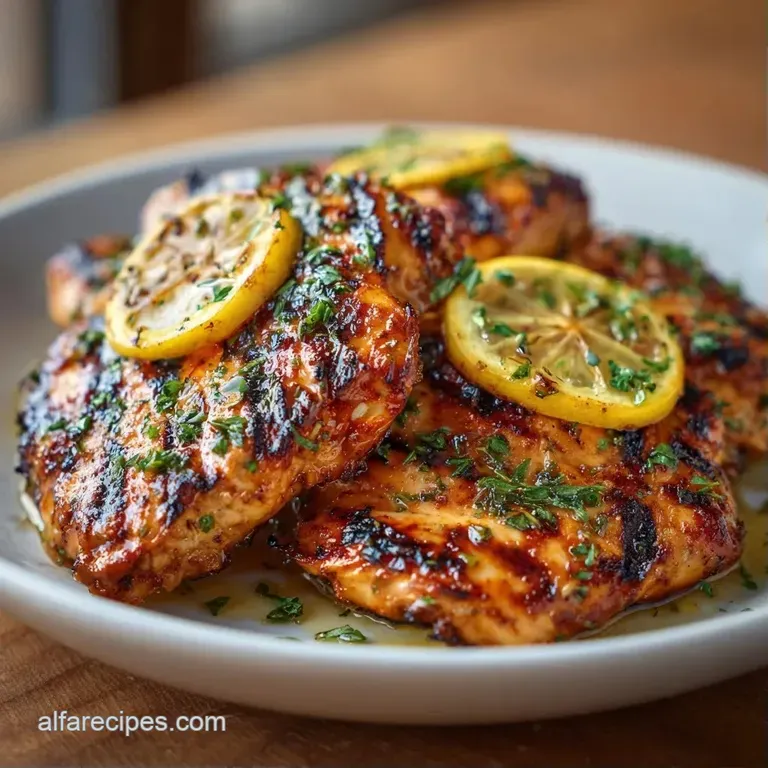
Even the best home cooks run into snags. Usually, it comes down to temperature control or moisture.
Troubleshooting Common Issues
| Issue | Solution |
|---|---|
| Chicken sticking to the grill | This usually happens because the pan wasn't hot enough or the chicken was too wet. When the meat hits a cool surface, the proteins bond to the metal. |
| Why did my chicken turn out dry despite the marinade | Overcooking is the only cause here. Even with a marinade, if you take the meat to 175°F or 180°F, the muscle fibers contract and squeeze out all the moisture. Pull it at 160°F. |
| Why are the edges burnt but the middle raw | Your chicken breasts are likely too thick in the center. Pounding them to a uniform thickness is the only real fix. |
Common Mistakes Checklist
- ✓ Over marinating beyond 4 hours
- ✓ Skipping the 10 minute rest
- ✓ Pulling the meat only when it "looks" done
- ✓ Using a pan that isn't preheated
Tasty Flavor Variations
While the classic Grilled Lemon Chicken Breast is a winner, you can easily tweak it to fit your mood. If you're feeling a bit more adventurous, try a Grilled Citrus Chicken Breast by swapping half the lemon juice for orange juice. It adds a subtle sweetness that pairs great with grilled asparagus.
For something with a bit more kick, you can turn this into a BBQ Lemon Chicken Breast. Just brush on a thin layer of your favorite honey BBQ sauce during the last 2 minutes of grilling. The sugar in the sauce will caramelize quickly, so don't put it on too early or it will burn.
If you're planning a bigger spread, this chicken works great with a side of Thai Peanut Sauce for a fusion style platter. The nuttiness of the peanut sauce balances the acidity of the lemon perfectly.
Using Different Cuts
If you find breasts too lean, try chicken thighs. They are more budget-friendly and almost impossible to overcook. Just extend the grilling time by 2-3 minutes per side.
Adjusting the Recipe Size
Scaling this recipe is straightforward, but you can't just multiply everything by four and expect it to work perfectly.
Scaling Down (2 Servings): Use a smaller pan to keep the heat concentrated. Reduce the marinating time slightly if you're using thinner cuts, as the acid penetrates faster. Since you're using fewer pieces, you can be a bit more generous with the zest for extra punch.
Scaling Up (8+ Servings): Work in batches. If you crowd the grill, the temperature drops, and the chicken will steam in its own juices rather than sear. This results in a gray, boiled look rather than a mahogany crust. For the marinade, only increase the salt and oregano to 1.5x.
Spices can become overwhelming when scaled linearly. Reduce the overall liquid by about 10% since you'll have less surface area relative to the volume of meat.
Truths About Grilling Chicken
There are a few common myths that lead to mediocre meals. Let's clear them up.
Myth: Searing "seals in" the juices. This is simply not true. Searing creates a flavorful crust and a great color, but it doesn't create a waterproof barrier. Moisture loss happens regardless of how you sear. The only way to keep it juicy is to monitor the internal temperature and let it rest.
Myth: You must marinate overnight for flavor. With acidic marinades, overnight is actually a bad idea. The acid breaks down the proteins too much, resulting in a mealy texture. 30 minutes to 4 hours is the sweet spot for this Grilled Lemon Chicken Breast.
Fresh Storage and Waste Tips
Since this is a meal prep friendly recipe, knowing how to store it is key.
Storage: Keep the chicken in an airtight container in the fridge for up to 4 days. To reheat, I recommend a splash of water or a squeeze of fresh lemon in the microwave to keep it from drying out. For the freezer, wrap individual breasts in foil and place them in a freezer bag for up to 3 months.
Zero Waste: Don't throw away the lemon halves after squeezing the juice. Toss them onto the grill for 2 minutes until they are charred. They make a great garnish or can be squeezed over the finished meat for an extra layer of smoky citrus flavor.
If you have leftover marinade in the bag, do not use it as a sauce unless you boil it first to kill any bacteria from the raw meat.
Serving and Plating Ideas
Presentation makes a huge difference, especially if you're serving this for guests. Slice the chicken on a slight diagonal (a bias cut) to show off the juicy center. This makes the portion look larger and more professional.
For a creamy contrast, I love serving this with a side of Creamless Alfredo Sauce. The richness of the sauce balances the bright lemon notes.
If you're going for a healthy vibe, serve it over a bed of quinoa or roasted root vegetables. A handful of fresh parsley and a final sprinkle of flaky sea salt on top really brings the colors together. Trust me, that final pinch of salt makes the lemon flavor pop.
Recipe FAQs
How to make the lemon chicken marinade?
Combine olive oil, lemon juice, zest, garlic, oregano, salt, and pepper in a Ziploc bag or glass bowl. Mixing the oil and acid first ensures a stable emulsion before you add the chicken.
How long should I marinate the chicken?
Refrigerate for 30 minutes to 4 hours. Do not exceed 4 hours, as the acidity of the lemon juice will begin to break down the meat and make it mushy.
Is it true that marinating chicken for 24 hours makes it more tender?
No, this is a common misconception. With highly acidic marinades like lemon, overnight soaking damages the protein structure and ruins the texture.
How to prevent the chicken from sticking to the grill?
Preheat the grill to 400°F (200°C) and lightly oil the grates. Sticking usually occurs when the surface is too cool, causing the proteins to bond to the metal.
Why is my grilled chicken breast dry even after marinating?
Overcooking is the only cause. If the internal temperature reaches 175°F or 180°F, the muscle fibers contract and squeeze out all moisture regardless of the marinade.
What is the best internal temperature for grilled chicken breast?
Remove from heat at 160°F (71°C). Use an instant-read thermometer in the thickest part of the breast to ensure it stays juicy during the final rest.
Can I use this recipe for meal prep?
Yes, this recipe is perfect for prepping. If you enjoyed the efficiency of this method, you can apply the same organizational approach found in our healthy grilled chicken guide.
Grilled Lemon Chicken Breast for 4 Servings