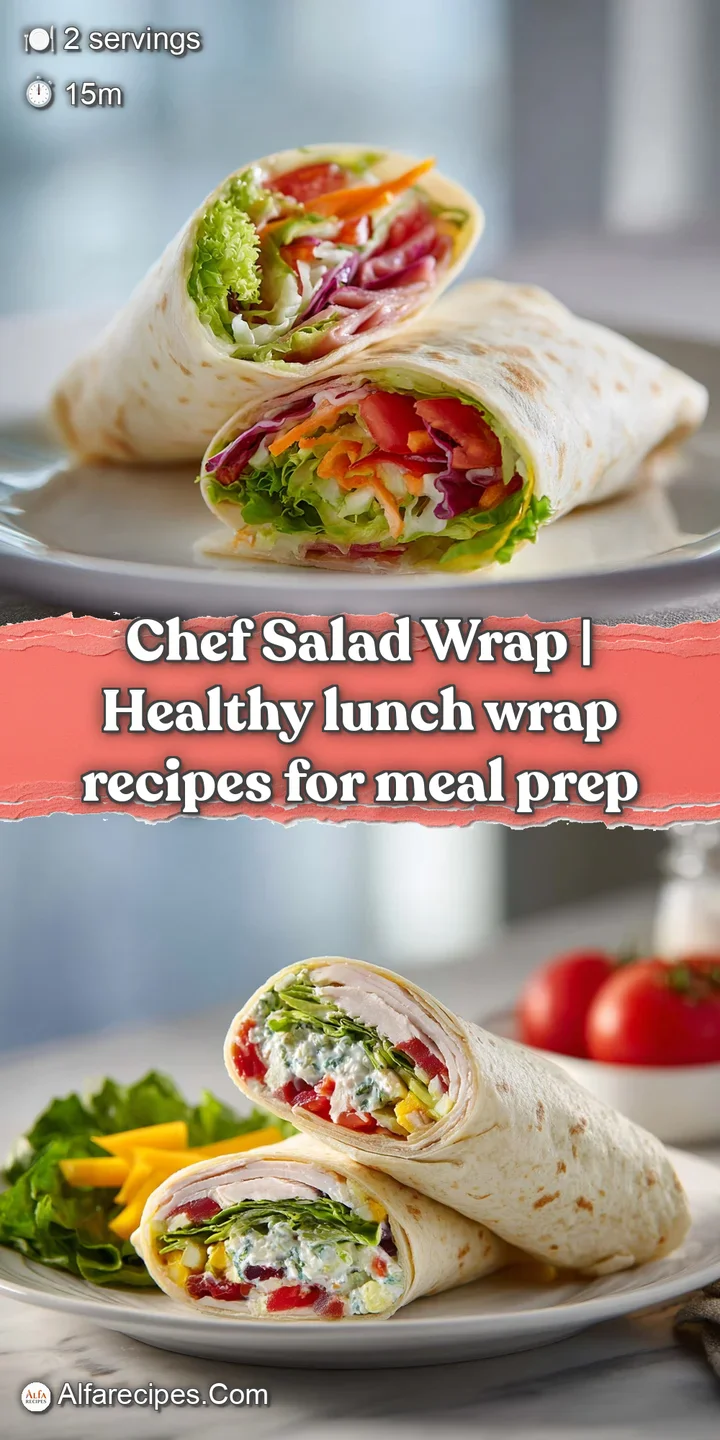
Chef Salad Wrap: a Crisp and Portable Lunch
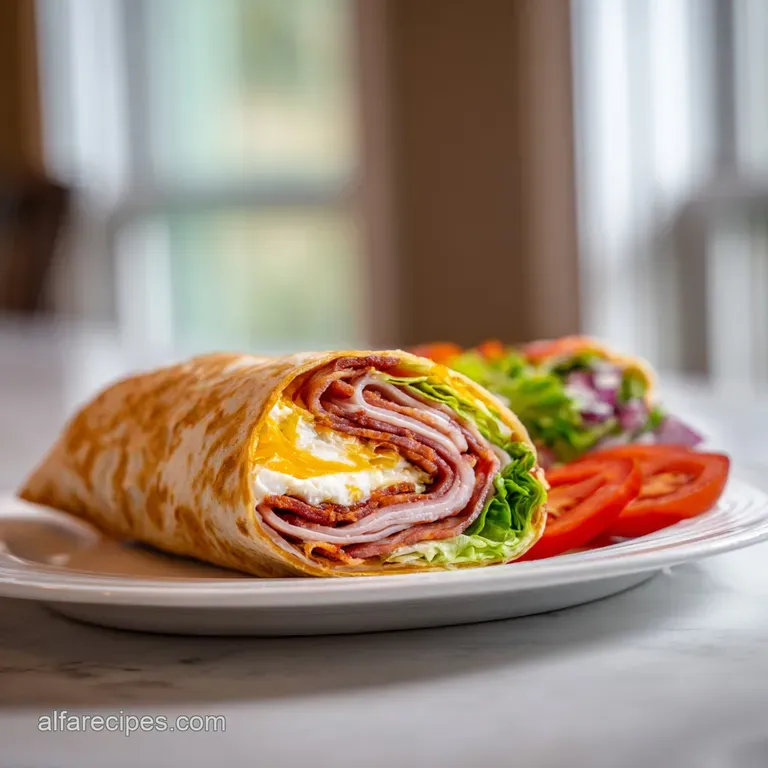
- Time: Active 15 minutes, Passive 0 minutes, Total 15 minutes
- Flavor/Texture Hook: Crunchy romaine meets smoky ham and velvety hard boiled eggs
- Perfect for: High protein meal prep or a budget-friendly office lunch
- Fresh Flavors in a Chef Salad Wrap
- The Secret to a Crunchy Wrap
- Essential Chef Salad Wrap Components
- Pantry Staples and Smart Substitutes
- Basic Tools for Better Wraps
- How to Build Your Wrap
- Solutions for Common Wrap Problems
- Creative Variations for Your Salad
- Keeping Your Wraps Fresh Longer
- Best Ways to Serve Wraps
- CRITICAL in Sodium
- Recipe FAQs
- 📝 Recipe Card
Fresh Flavors in a Chef Salad Wrap
Picture this: you're sitting at your desk, the clock finally hits noon, and you pull out a package that actually smells like a garden. You unwrap the parchment, and there's a distinct "snap" as the flour tortilla yields to your first bite.
Inside, the romaine is still shockingly cold and loud a proper, percussive crunch while the salty, smoky ham and oven-roasted turkey provide that savory backbone we all crave mid day. No limp leaves, no leaking dressing, just a clean, vibrant explosion of textures.
I used to be the person who brought a sad, wilted plastic container of greens to work, only to end up with a puddle of tomato water at the bottom. This Chef Salad Wrap changed that entire dynamic for me.
It’s about taking those classic diner vibes the ham, the turkey, the hard boiled egg and folding them into a format that doesn't require a fork or a prayer that the lid stays sealed. It’s efficient, it’s packed with nutrition, and honestly, it’s just fun to eat.
We've all had those wraps that fall apart the second you pick them up, or worse, the ones where the dressing turns the bread into mush. I've spent plenty of lunch hours learning the hard way that you can't just throw things in a circle and hope for the best.
Through a bit of trial and error (and many torn tortillas), I found that the order of operations is everything. If you follow this method, you’re getting a hand held salad that actually behaves itself until the very last bite.
The Secret to a Crunchy Wrap
Most people think a wrap is just a burrito by another name, but the physics here are totally different because we’re dealing with high moisture raw vegetables. To keep things from getting swampy, we have to respect the moisture migration.
- Hydrophobic Layering: Placing the cheese directly against the tortilla creates a fat based barrier that prevents the vegetable juices from soaking into the starch.
- Surface Area Management: Shredding the romaine finely increases the crunch per-bite ratio while allowing the leaves to be packed tightly, which provides internal structural integrity.
- Pulp Removal: Extracting the watery seeds from the tomatoes and cucumbers removes the primary source of "leakage" that typically ruins a refrigerated wrap.
- Compression Physics: Using parchment paper to roll and rest the wrap forces the layers to bond, creating a solid cylinder that won't unravel when sliced.
| Method | Prep Time | Portability | Texture Profile |
|---|---|---|---|
| Fast (This Recipe) | 15 minutes | High | Crisp, firm, layered |
| Classic Bowl | 10 minutes | Low | Loose, needs a fork |
| Deconstructed Prep | 20 minutes | Medium | Fresh but assembly heavy |
Choosing the fast method described here gives you the best of both worlds it’s as quick as tossing a salad in a bowl but offers the grab and-go convenience of a sandwich. Since we aren't cooking anything, the quality of the "snap" in your vegetables is what defines the experience.
Essential Chef Salad Wrap Components
When we talk about a Chef Salad Wrap, we aren't just looking for fillers; we're looking for ingredients that play specific roles in the architecture of the meal. The flour tortilla isn't just a container; it's the foundation that needs to be supple enough to bend without shattering.
Using a 10 inch size is non negotiable here; anything smaller and you'll be struggling to contain the sheer volume of protein and greens we're packing in.
| Component | Science Role | Pro Secret |
|---|---|---|
| Swiss & Cheddar | Moisture Barrier | Use room temp slices so they bend without breaking the tortilla skin. |
| Romaine Lettuce | Structural Volume | Spin until bone dry; even a drop of water can trigger the "soggy bread" effect. |
| Smoked Ham | Umami Backbone | Request "shaved" or "thinly sliced" to allow for tighter, more compressed rolling. |
| Hard Boiled Eggs | Texture Binder | Slice into thin rounds to ensure even distribution in every single bite. |
The interaction between the fats in the cheese and the proteins in the meat creates a satisfying mouthfeel that balances the sharp acidity of the tomatoes. If you're looking to mix up your lunch routine, you might also enjoy the flavor profile of a Garlic Chicken Lettuce Wrap, which uses a similar focus on fresh, vibrant crunch but with a warm protein center.
Pantry Staples and Smart Substitutes
This recipe is designed to be budget friendly by using ingredients you likely already have or can find easily at any grocery store. The beauty of the "Chef" style is its versatility it’s essentially a "clean out the fridge" masterpiece disguised as a gourmet lunch.
- 2 large (10 inch) flour tortillas: Why this? Provides the elasticity needed for a tight, professional grade wrap.
- Substitute: Whole wheat tortillas for extra fiber, though they are slightly more prone to tearing.
- 4 slices Swiss cheese & 4 slices Sharp Cheddar cheese: Why this? The dual flavor profile adds complexity and creates the essential moisture shield.
- Substitute: Provolone or Havarti work well if you prefer a milder, creamier finish.
- 4 oz smoked ham & 4 oz oven-roasted turkey breast: Why this? Classic protein duo that offers lean nutrition and smoky depth.
- Substitute: Shredded rotisserie chicken or roast beef for a different flavor profile.
- 2 hard boiled eggs: Why this? Adds a velvety, rich texture that mimics a creamy dressing.
- Substitute: Sliced avocado provides a similar creaminess for those avoiding eggs.
- 4 slices thick cut bacon: Why this? Provides the necessary "crunch" and saltiness to offset the fresh greens.
- Substitute: Turkey bacon or even smoked sunflower seeds for a vegetarian crunch.
- 2 cups Romaine lettuce: Why this? Offers the most durable "snap" among all salad greens.
- Substitute: Shredded iceberg if you want maximum water content and a lighter bite.
- 1/2 cup English cucumber & 1/2 cup Roma tomatoes: Why this? These varieties have lower seed to flesh ratios, reducing liquid runoff.
- Substitute: Bell peppers or radishes for an even sharper, drier crunch.
- 1/4 cup red onion: Why this? Adds a zesty bite that cuts through the richness of the meats.
- Substitute: Shallots for a more delicate, less aggressive onion flavor.
- 1/4 cup Thousand Island dressing: Why this? The classic tangy sweet pairing for a chef salad.
- Substitute: Greek yogurt mixed with herbs and lemon for a lower calorie, vibrant alternative.
| Original Ingredient | Substitute | Why It Works |
|---|---|---|
| Flour Tortilla | Large Collard Green Leaf | Low carb and sturdy. Note: Must blanch briefly to make it pliable enough. |
| Thousand Island | Ranch + Hot Sauce | Adds a creamy heat that complements the smoked turkey perfectly. |
| Smoked Ham | Smoked Tofu Slices | Similar smoky notes and firm texture for a meat free version. |
Basic Tools for Better Wraps
You don't need a high end kitchen to pull this off, but a few specific items make the process significantly easier. The goal is minimal tools for maximum output.
- Salad Spinner: This is my absolute favorite tool for this recipe. If your lettuce is wet, your wrap is doomed. A spinner uses centrifugal force to pull every last drop of moisture from the leaves.
- Sharp Chef's Knife: You need clean cuts on the tomatoes and cucumbers. A dull knife will mash the vegetables, releasing their juices onto your board (and eventually your tortilla).
- Parchment Paper: Don't skip this! It’s the secret to that tight, professional "deli wrap." It holds everything in place while the tortilla sets its shape.
- Small Sieve: If you're using canned or very juicy ingredients, a quick strain ensures you aren't adding excess liquid to the assembly line.
I've learned that trying to roll a wrap on a wooden cutting board can sometimes lead to sticking if the board isn't perfectly dry. I prefer rolling on a piece of parchment or a clean, dry countertop to ensure the tortilla stays supple and moves freely.
How to Build Your Wrap
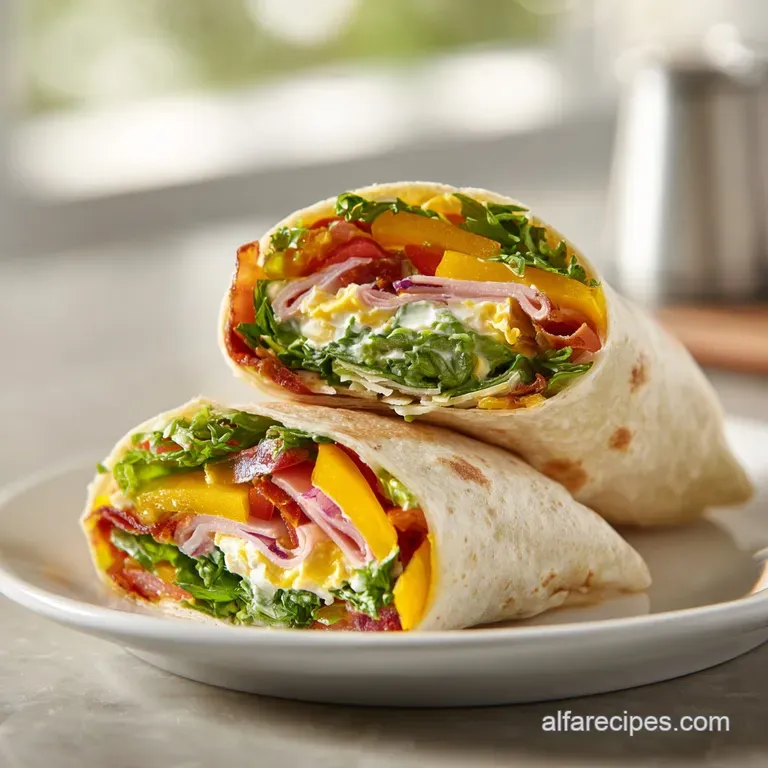
Efficiency is the name of the game here. We are going to assemble these in a specific order to ensure the heavy stuff stays centered and the wet stuff stays contained.
- Prepare the vegetables. Wash and shred the romaine lettuce. Spin in a salad spinner or pat with paper towels until bone dry to prevent sogginess. Note: Dry leaves are the only way to keep the tortilla from turning into paste.
- Seed the produce. Seed the cucumbers and tomatoes by removing the watery pulp before dicing the flesh. Note: The pulp is 90% water; removing it preserves the "snap" of the wrap.
- Lay the foundation. Lay the flour tortillas flat on a clean surface. Place 2 slices of Swiss cheese and 2 slices of Cheddar cheese in the center of each tortilla to create a hydrophobic moisture barrier.
- Stack the proteins. Layer 2 oz of ham and 2 oz of turkey over the cheese on each wrap. Top with the sliced hard boiled eggs and crumbled bacon. Look for an even, flat layer to make rolling easier later.
- Add the garden. Distribute the shredded lettuce, diced cucumbers, tomatoes, and red onion evenly across the protein layer. Ensure the vegetables don't reach the very edges of the tortilla.
- Season and dress. Drizzle with Thousand Island dressing and season with cracked black pepper and a pinch of sea salt.
- Initiate the fold. Fold the sides of the tortilla inward by about 2 inches.
- Execute the roll. Roll tightly from the bottom, tucking the ingredients in as you go until the seam is on the bottom.
- Set the shape. Use parchment paper to wrap and compress the roll for maximum stability. Let it sit for 2 minutes until the tortilla molds to the shape.
- Final cut. Slice diagonally through the parchment with a serrated knife for a beautiful, clean presentation.
Solutions for Common Wrap Problems
Even the best of us run into a "blowout" or a soggy bottom occasionally. The trick is knowing why it happened so you can adjust your technique for the next one.
The Exploding Tortilla
If your tortilla splits open while you're rolling, it's usually because the starch has become too dry or cold. Flour tortillas are much more elastic when they are slightly warm. If you find yours are cracking, try throwing them in the microwave for 10 seconds under a damp paper towel before you start stacking.
This "activates" the gluten and makes the wrap significantly more forgiving.
The Soggy Bottom Syndrome
This is the most frequent complaint with a Chef Salad Wrap. If you find your wrap is wet by the time you eat it, check your tomato prep. Did you leave the "guts" in? That watery gel is the enemy of a dry wrap.
Also, make sure your dressing is drizzled onto the protein or the lettuce, never directly onto the tortilla itself. The cheese layer is your best friend here don't skimp on it!
| Problem | Root Cause | Solution |
|---|---|---|
| Tortilla Tearing | Overfilling or cold wrap | Leave 2 inches of space at the edges; warm tortilla for 10 seconds. |
| Filling Sliding Out | Loose rolling technique | Use parchment paper to maintain constant tension during the roll. |
| Bitter Taste | Oxidized red onion | Slice onions paper thin and soak in ice water for 5 mins before using. |
Common Mistakes Checklist:
- ✓ Forgot to dry the lettuce (results in a puddle inside the wrap).
- ✓ Using "wet" tomatoes with the seeds still inside.
- ✓ Placing the dressing directly on the tortilla instead of the meat.
- ✓ Overstuffing the center (making it impossible to close the sides).
- ✓ Skipping the "rest" period in parchment paper.
Creative Variations for Your Salad
The classic Chef Salad Wrap is a baseline, but the possibilities for customization are endless. If you're a fan of vibrant, crunchy meals, you might also want to try this Whole30 Chinese Chicken Salad, which offers a completely different flavor profile using ginger and sesame while maintaining that essential salad in-a form factor.
Creating a Zesty Chicken Version
If ham isn't your favorite, swap it out for grilled chicken breast seasoned with lemon and oregano. Switch the Thousand Island for a zesty herb vinaigrette. To keep it from getting soggy with a thinner dressing, I recommend mixing the dressing with the lettuce separately in a bowl JUST before assembly, ensuring the leaves are lightly coated rather than swimming in liquid.
Crafting a Low Carb Alternative
For those watching their carb intake, you can ditch the flour tortilla entirely. Use a large, blanched collard green leaf or several overlapping butter lettuce leaves. While it won't have the same "chew" as a tortilla, it increases the nutrition and provides a beautiful, vibrant green exterior.
Just be sure to shave down the thick stem of the collard leaf so it rolls smoothly without snapping.
Scaling for the Week
If you're meal prepping for a family or a long work week, do not assemble the wraps fully on Sunday. Instead, prep all your components: dice the veggies, slice the meats, and boil the eggs. Store the "wet" veggies in one container and the proteins in another.
In the morning, it takes exactly 2 minutes to layer and roll.
- Scaling DOWN: For a single serving, use half the amounts but keep the whole egg it’s too much hassle to use half!
- Scaling UP: When making 4 or more, set up an assembly line. Lay out all tortillas at once to ensure even distribution of the expensive ingredients like bacon and turkey.
Keeping Your Wraps Fresh Longer
The Chef Salad Wrap is best eaten within 4 to 6 hours of assembly, but with the right storage tricks, you can push that to 24 hours. The key is preventing the refrigerator from "sweating" the ingredients.
- Fridge
- Keep wrapped tightly in parchment paper and then placed in an airtight container. The parchment acts as a secondary moisture wick.
- Temperature
- Store in the coldest part of your fridge (usually the back of the bottom shelf) to keep the romaine as crisp as possible.
- Zero Waste Tip
- Don't throw away those tomato seeds and pulp! Toss them into a small jar with some olive oil and vinegar for a quick "panzanella" style dressing for later in the week. The broccoli stalks or extra onion slivers can be saved in a freezer bag for your next batch of homemade vegetable stock.
I honestly don't recommend freezing these. The high water content in the cucumbers, tomatoes, and lettuce means they will turn to mush once thawed. This is a dish that celebrates "fresh and vibrant," and freezing is the enemy of that texture.
Best Ways to Serve Wraps
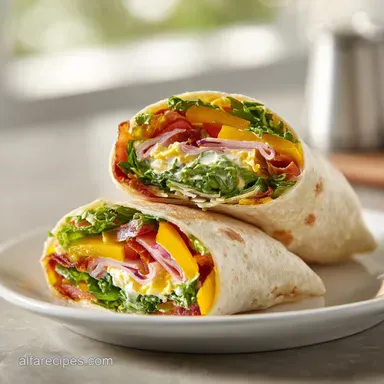
Serving this wrap is all about the "reveal." Because we've layered it so carefully, the cross section should look like a work of art. Use a very sharp, non serrated or high-quality serrated knife to slice it on a bias. This increases the visual surface area and makes it easier to handle.
The Myth of the "Sealed" Wrap
Many people believe you need to "glue" the wrap shut with mayo or water. This is a myth! A properly rolled tortilla held under tension by parchment paper will seal itself as the starches slightly hydrate and "set" in their new shape. Adding extra liquid to the seam actually makes it more likely to slip and slide apart.
Temperature Contrast
A great Chef Salad Wrap is a study in temperature. The tortilla can be slightly warm to the touch, but the interior must be ice cold. This contrast makes the meal feel refreshing and energizing. Serve it alongside some crunchy veggie straws or a simple fruit salad to keep the meal light and nutrition focused.
Whether you're making this for a quick Tuesday lunch or prepping a batch for a weekend picnic, the key is the crunch. Respect the ingredients, manage the moisture, and you'll never look at a "boring" salad the same way again. Trust me, once you master the parchment roll, you'll be wrapping everything in sight!
CRITICAL in Sodium
2615 mg of sodium (114% of daily value)
The American Heart Association recommends limiting sodium intake to no more than 2,300mg per day, with an ideal limit of 1,500mg for most adults.
Tips to Reduce Sodium
-
Choose Lower Sodium Cheeses-15%
Opt for reduced sodium Swiss and Cheddar cheeses. This can significantly cut down sodium from the cheese components.
-
Select Low-Sodium Processed Meats-25%
Replace regular smoked ham and oven-roasted turkey breast with low-sodium versions. Also, consider using lower sodium bacon.
-
Make Your Own Dressing-20%
Thousand Island dressing is often high in sodium. Prepare a homemade version using a base of plain yogurt or light mayonnaise and control the salt.
-
Eliminate Added Salt-5%
The recipe calls for a pinch of sea salt. Remove this entirely as the processed meats and cheeses will provide ample sodium.
-
Boost Flavor with Herbs and Spices
While not directly impacting sodium, use fresh or dried herbs like parsley, dill, or chives, and spices like garlic powder or onion powder to enhance flavor without added salt.
Recipe FAQs
Is chef salad healthy for weight loss?
It depends on your portion management and dressing choice. While this recipe is packed with lean protein like turkey and ham, the calorie density is significant due to the cheese and dressing, so monitor your total intake throughout the day.
What's the difference between a chef salad and a Cobb salad?
The protein and presentation are the main separators. A chef salad typically features julienned ham and turkey with hard boiled eggs, whereas a Cobb salad traditionally emphasizes chicken, avocado, and blue cheese arranged in neat rows.
What typically goes in a chef salad?
It features a foundation of greens, assorted deli meats, and hard boiled eggs. This specific version includes romaine lettuce, smoked ham, oven-roasted turkey, Swiss and Cheddar cheeses, bacon, cucumbers, tomatoes, and red onion.
What does PF Chang's put in their lettuce wraps?
They use a sautéed mixture of minced chicken and aromatics. This differs significantly from our fresh deli style wrap, which focuses on cold stacked ingredients like ham and turkey without any cooking required.
How to keep the wrap from getting soggy?
Create a moisture barrier by placing cheese slices directly against the tortilla. This prevents the liquid from the tomatoes, cucumbers, and dressing from soaking into the flour wrap. If you enjoy mastering these protective structural techniques, see how we focus on consistent protein searing to manage moisture in other dishes.
How to prep these ahead of time?
Assemble the dry components up to 24 hours in advance. Keep the salad ingredients and proteins tightly wrapped in parchment, but avoid adding the dressing until just before you plan to eat to maintain peak crunch.
Is it true I must leave the vegetable pulp in the salad?
No, this is a common misconception. You should always seed your tomatoes and cucumbers before dicing; removing the watery pulp is the single most important step to prevent your wrap from turning into a mushy mess.
Chef Salad Wrap
Ingredients:
Instructions:
Nutrition Facts:
| Calories | 1058 kcal |
|---|---|
| Protein | 67.4 g |
| Fat | 64.2 g |
| Carbs | 52.8 g |
| Fiber | 4.1 g |
| Sugar | 8.9 g |
| Sodium | 2615 mg |
