Lemon Ricotta Cookies: Soft and Zesty
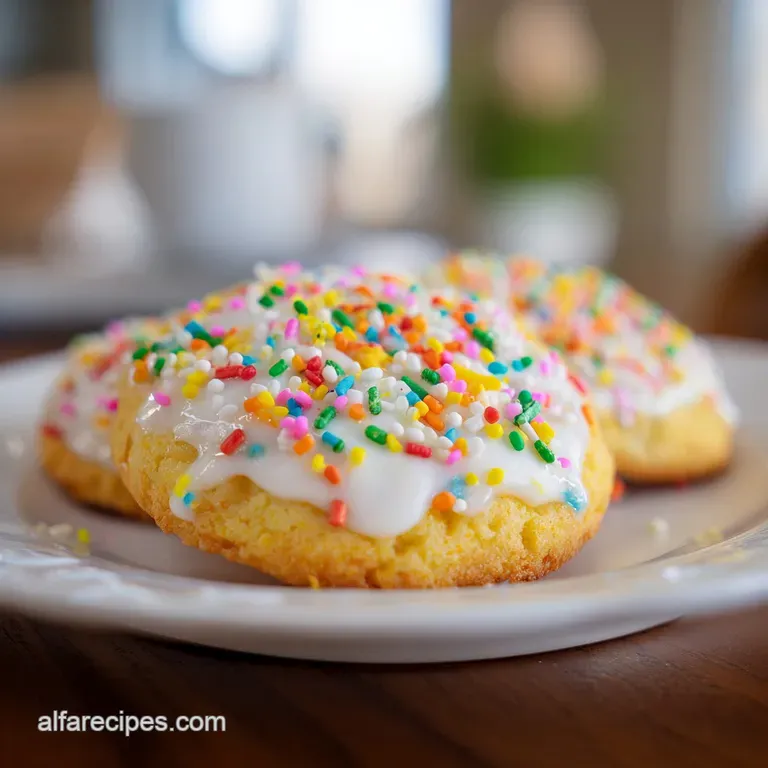
- Time:15 minutes prep + 15 minutes cook = 30 minutes total
- Flavor/Texture Hook: Cloud like, velvety crumb with a zingy, bright finish
- Perfect for: Spring gatherings, tea parties, or beginner bakers wanting consistent results
- Achieving the Best Lemon Ricotta Cookie Recipe
- Why Ricotta Creates Cloud Textures
- Component Analysis for Precision
- Selecting Your Ingredients and Substitutes
- Must Have Tools for Precision
- Perfecting the Step By Step
- Troubleshooting Texture and Flavor Issues
- Simple Variations for Every Palate
- Scaling and Batch Adjustments
- Storage and Zero Waste Methods
- Finishing and Decorating Like Pros
- Recipe FAQs
- 📝 Recipe Card
Achieving the Best Lemon Ricotta Cookie Recipe
Walking into my kitchen on a rainy Tuesday, the air felt heavy and dull, but that changed the second I started rubbing two tablespoons of fresh lemon zest into 400 grams of granulated sugar. The scent is immediate a sharp, bright, and almost floral punch that cuts through any gloom.
I remember the first time I made these; I thought the dough was too sticky and almost added more flour, but I’ve learned that the moisture from the 425 grams of cold ricotta is exactly what keeps these from becoming dry hockey pucks.
This specific recipe isn't your standard crunchy biscuit. It sits in that glorious middle ground between a soft baked sugar cookie and a tiny, portable lemon cake. We are looking for a texture that feels substantial but melts away the moment it hits your tongue.
It’s a precise balance of fats and acids that I’ve tested to ensure they don't spread into flat puddles on your baking sheet.
We aren't just making a snack here; we are executing a bit of kitchen physics. Most people think cookies need to be chilled for hours to hold their shape, but this method relies on the cold temperature of the ricotta cheese and the specific creaming time of the butter to provide structure without the wait.
It’s a fast, reliable way to get a professional style result in exactly 30 minutes total.
Why Ricotta Creates Cloud Textures
Moisture Encapsulation: The 425g of whole milk ricotta acts as a reservoir of hydration, which prevents the 475g of flour from forming tough gluten strands during the mixing process.
Fat Distribution: Using 225g of room temperature butter alongside the fat in the cheese creates a dual layer fat system that ensures a velvety mouthfeel even after the cookies have cooled completely.
Acid Base Interaction: The lemon juice and ricotta acidity react with the baking powder, creating micro bubbles of carbon dioxide that lift the dough into a domed shape rather than letting it flatten.
Sugar Infusion: Rubbing zest into sugar performs mechanical abrasion, breaking the zest’s cellular walls to release oils that would otherwise stay trapped in the peel.
| Baking Method | Active Time | Resulting Texture | Best For |
|---|---|---|---|
| Standard Oven | 15 minutes | Domed, soft, even color | Large batches and parties |
| Convection | 12 minutes | Slightly crisper edges | Quick afternoon snacks |
| Air Fryer | 8 minutes | Denser, more cake like | Single servings (small batch) |
The heat distribution in a standard oven at 175°C is ideal for this dough because it allows the edges to set just as the center reaches its maximum lift. If you use a convection setting, the circulating air might dry the surface too quickly, potentially leading to a more cracked appearance, which is why I generally stick to the traditional bake setting for that smooth, professional finish.
Component Analysis for Precision
| Component | Science Role | Pro Secret |
|---|---|---|
| 475g Flour | Structure Provider | Weigh this; 475g is more precise than measuring cups to prevent density. |
| 425g Ricotta | Moisture Reservoir | Use whole milk only; part skim lacks the fat needed for the velvety crumb. |
| 225g Butter | Aeration Base | Ensure it is soft to the touch but not melting to hold air bubbles. |
| 2 tbsp Zest | Flavor Catalyst | Rub into sugar first to ensure every bite is evenly scented with oils. |
Selecting your cheese is the most important decision you'll make for this lemon ricotta cookie recipe. I prefer a ricotta that looks thick and slightly grainy in the container; if yours looks watery, let it sit in a fine mesh sieve for 10 minutes to remove excess liquid.
This prevents the dough from becoming a runny mess that won't hold its shape on the parchment paper.
Selecting Your Ingredients and Substitutes
To get the exact result we’re looking for, the ingredient quality matters more than the brand name. For example, using a high-quality sea salt can brighten the citrus notes significantly compared to standard table salt.
- 475g All purpose flour: Provides the necessary protein for structure. Why this? It has the right balance of strength and softness for cake like cookies.
- Substitute: 1 to-1 gluten-free baking blend (ensure it contains xanthan gum).
- 425g Whole milk ricotta: The heart of the moisture and tenderness. Why this? Cold cheese prevents the butter from melting too quickly in the mixer.
- Substitute: Full fat Greek yogurt (strained for 2 hours to match ricotta's thickness).
- 225g Unsalted butter: Adds richness and allows for aeration during creaming. Why this? Room temperature butter integrates smoothly with sugar to create volume.
- Substitute: Vegan butter sticks (ensure they are high fat, not oil based spreads).
- 400g Granulated sugar: Sweetens and provides the "crisp" in the initial bite. Why this? Fine crystals rub better against the lemon zest to release oils.
- Substitute: Caster sugar for an even finer, more delicate crumb.
- 2 tbsp Lemon zest: The primary source of aromatic flavor. Why this? Contains essential oils that don't evaporate as easily as lemon juice.
- Substitute: Lime zest for a tropical "Mojito" style variation.
- 1 large egg: Binds the fats and liquids together. Why this? Room temperature eggs emulsify better with the creamed butter.
- Substitute: 1/4 cup applesauce (yields a denser, moister cookie).
Must Have Tools for Precision
You don’t need a professional bakery setup, but a few specific tools will make your life much easier. I always recommend a digital kitchen scale for the 475g of flour and 425g of ricotta.
Measuring by volume (cups) is notorious for being inaccurate in baking, and with a dough this moisture sensitive, being off by 30 grams of flour can turn a cloud like cookie into a dry biscuit.
A stand mixer or a sturdy hand mixer is non negotiable for the creaming stage. We need to beat that 225g of butter and 400g of sugar for a full 3 minutes. This isn't just mixing; it's a mechanical process of forcing air into the fat.
If you try to do this by hand, you likely won't achieve the pale, aerated texture required for the cookies to rise properly in the oven.
Finally,, grab a 1 tablespoon cookie scoop. Uniformity isn't just about looking pretty; it's about even baking. If you have some cookies that are double the size of others, the small ones will dry out while the large ones stay raw in the middle.
I’ve found that using a scoop also helps keep the dough cool, as the warmth of your hands can melt the butter and lead to excess spreading.
Perfecting the step-by-step

1. Infuse the Base
Start by preheating your oven to 175°C. In your mixer bowl, combine the 400g of granulated sugar and 2 tablespoons of lemon zest. Use your fingertips to rub them together for about 60 seconds until the sugar looks like damp sand and smells intensely of citrus.
This is the single most important flavor step. Add the 225g of softened butter and beat on medium high for 3 minutes until the mixture is pale and fluffy.
2. Add the Cloud
Add the 425g of cold ricotta cheese, the egg, 1 tablespoon of lemon juice, and the vanilla extract. Beat the mixture until just combined and no large streaks of cheese remain.
Note: It might look slightly curdled at this stage because of the cold cheese hitting the butter, but don't panic it will smooth out once the dry ingredients are added.
3. Scoop and Bake
In a separate bowl, whisk the 475g of flour with the baking powder and salt. Gradually fold this into the wet ingredients on low speed. Stop the mixer the moment the flour disappears to avoid overworking the gluten. Use a scoop to drop rounded mounds onto your lined sheets.
Bake for 12-15 minutes until the tops feel set to a gentle touch and the bottoms are a very pale gold.
4. The Glazing Finish
While the cookies cool on a wire rack, whisk together the 240g of powdered sugar, 4 tablespoons of lemon juice, and the remaining zest. The glaze should be thick enough to coat a spoon without running off immediately. Dip each cooled cookie face down into the glaze, until the top is fully submerged.
Let the excess drip off before turning them upright. Sprinkle with a little extra zest while the glaze is still wet for a beautiful finish.
Chef's Tip: If your glaze feels too thin, add powdered sugar one tablespoon at a time. A thick glaze is what creates that signature "shatter" when you bite into the soft cookie, providing a much needed texture contrast.
Troubleshooting Texture and Flavor Issues
Preventing a Soggy Cookie
If your cookies feel damp or mushy the day after baking, it's usually because the 425g of ricotta had too much whey. Next time, try the "paper towel test": place the cheese on a stack of paper towels for 15 minutes before mixing.
This removes the surface moisture while keeping the internal fat and solids that provide the velvety crumb.
Achieving Uniform Rounds
When the dough is very tacky, it can stick to the scoop and create lopsided cookies. If this happens, lightly spray your cookie scoop with non stick oil or dip it in a bit of flour between every few scoops.
This ensures the dough releases in a perfect sphere, which translates to a symmetrical, professional looking dome once baked.
Avoiding Flat Cookies
Flat cookies are almost always the result of butter that was too warm or over mixing the dough. If your kitchen is hot, pop the bowl of dough into the fridge for 10 minutes before scooping.
This firms up the fat, ensuring it melts slowly in the oven and gives the baking powder time to do its lifting work.
| Problem | Root Cause | Solution |
|---|---|---|
| Cookies spread too much | Butter was too soft or melted | Chill dough for 10 minutes before baking. |
| Tops are cracked and dry | Over baked or too much flour | Reduce bake time by 2 mins; weigh flour to exactly 475g. |
| Glaze won't set | Too much lemon juice | Add more sifted powdered sugar until it reaches honey like consistency. |
Building a solid understanding of these pitfalls is how you move from a casual baker to someone who can reliably produce these for gifts or events. Much like my authentic lemon potatoes, the success is in the balance of acid and fat.
Common Mistakes Checklist:
- ✓ Never skip draining the ricotta; excess water is the enemy of a domed cookie.
- ✓ Ensure the oven is fully preheated for at least 15 minutes to provide immediate lift.
- ✓ Don't over mix once the flour is added; stop as soon as white streaks vanish.
- ✓ Let the cookies cool 100% before glazing, or the icing will simply melt and run off.
- ✓ Use a zester that only takes the yellow part; the white pith underneath is bitter.
Simple Variations for Every Palate
For a Floral Twist
If you can find Meyer lemons, they are a fantastic substitution in this lemon ricotta cookie recipe. Meyer lemons are a cross between a regular lemon and a mandarin orange, giving them a sweeter, floral aroma.
Since they are less acidic, you might want to increase the zest by half a tablespoon to keep that bright punch.
For gluten-free Alternatives
I have successfully made these using a high-quality gluten-free flour blend. Because ricotta is so moisture heavy, the gluten-free flour actually hydrates very well, preventing that "gritty" texture often found in GF baking.
Just make sure your blend contains xanthan gum to help hold the structure of the cookie together.
For an Almond Infusion
Lemon and almond are a classic pairing. Swap the 1 teaspoon of vanilla extract for 1/2 teaspoon of almond extract. The result is a much more "bakery style" flavor profile that pairs beautifully with a cup of espresso.
You can even top the glazed cookies with toasted sliced almonds for an extra crunch that contrasts the soft interior.
For those who enjoy these citrus notes but want something more traditional for dessert, my classic chess pie offers a similar sweet and tangy profile in a different format.
Scaling and Batch Adjustments
When you need to make a massive batch for a bake sale or a small batch for a quiet night in, scaling this recipe is quite straightforward as long as you keep the ratios in check.
Scaling Down (Half Batch): To make roughly 22 cookies, use 237g of flour, 112g of butter, and 212g of ricotta. For the egg, whisk one large egg in a small bowl and use exactly half of it (about 25g).
Reduce your baking time by about 2 minutes, as smaller quantities in the oven can sometimes cook faster due to better air circulation.
Scaling Up (Double Batch): When doubling to 88 cookies, use the full 950g of flour and 850g of ricotta. However, be careful with the leavening; only use 1.5 times the baking powder (1.5 tsp instead of 2) to prevent a metallic aftertaste.
Always bake in batches rather than crowding two trays onto one rack, as this ensures the heat hits every cookie evenly.
| Servings | Flour | Butter | Ricotta | Pan Size |
|---|---|---|---|---|
| 22 Cookies | 237g | 112g | 212g | 1 standard sheet |
| 44 Cookies | 475g | 225g | 425g | 2 standard sheets |
| 88 Cookies | 950g | 450g | 850g | 4 sheets (bake in rounds) |
Storage and Zero Waste Methods
These cookies are best stored in an airtight container at room temperature for up to 3 days. Because of the ricotta, they stay soft much longer than a standard butter cookie. If you find yourself in a humid environment, I recommend keeping them in the fridge to prevent the glaze from becoming sticky or "weeping."
For long term storage, these freeze beautifully. You can freeze the baked, unglazed cookies for up to 3 months. When you're ready to eat, let them thaw at room temperature for an hour, then whip up a fresh batch of glaze. This keeps the glaze looking shiny and prevents it from cracking in the freezer.
Zero Waste Tip: Don't throw away your lemon carcasses after juicing and zesting! You can toss the leftover lemon halves into a jar of white vinegar. After two weeks, you'll have a citrus scented natural cleaner.
Alternatively, you can slice the spent peels thinly and boil them in a 1:1 sugar and water syrup to make candied lemon peels, which are a fantastic topping for these very cookies.
Finishing and Decorating Like Pros
Presentation is where you turn a simple home baked treat into something that looks like it came from an Italian pastry shop. When dipping the cookies into the glaze, don't just drop them; give them a slight twist as you pull them up. This creates a beautiful swirl pattern in the icing as it sets.
If you want a more festive look, you can add a drop of natural yellow food coloring to the glaze, though I prefer the natural, creamy white look of the powdered sugar. Adding a tiny pinch of flaky sea salt on top of the wet glaze can also provide a sophisticated flavor balance that makes the lemon pop even more.
The final touch is always the zest. Make sure you zest the lemon directly over the cookies while the glaze is still wet. This ensures the tiny flecks of yellow stick perfectly. It provides a visual "hint" to the eater of what flavor to expect, which is a classic rule in professional plating.
These cookies aren't just a treat; they’re a small, bright piece of sunshine that you can share with anyone who needs a lift.
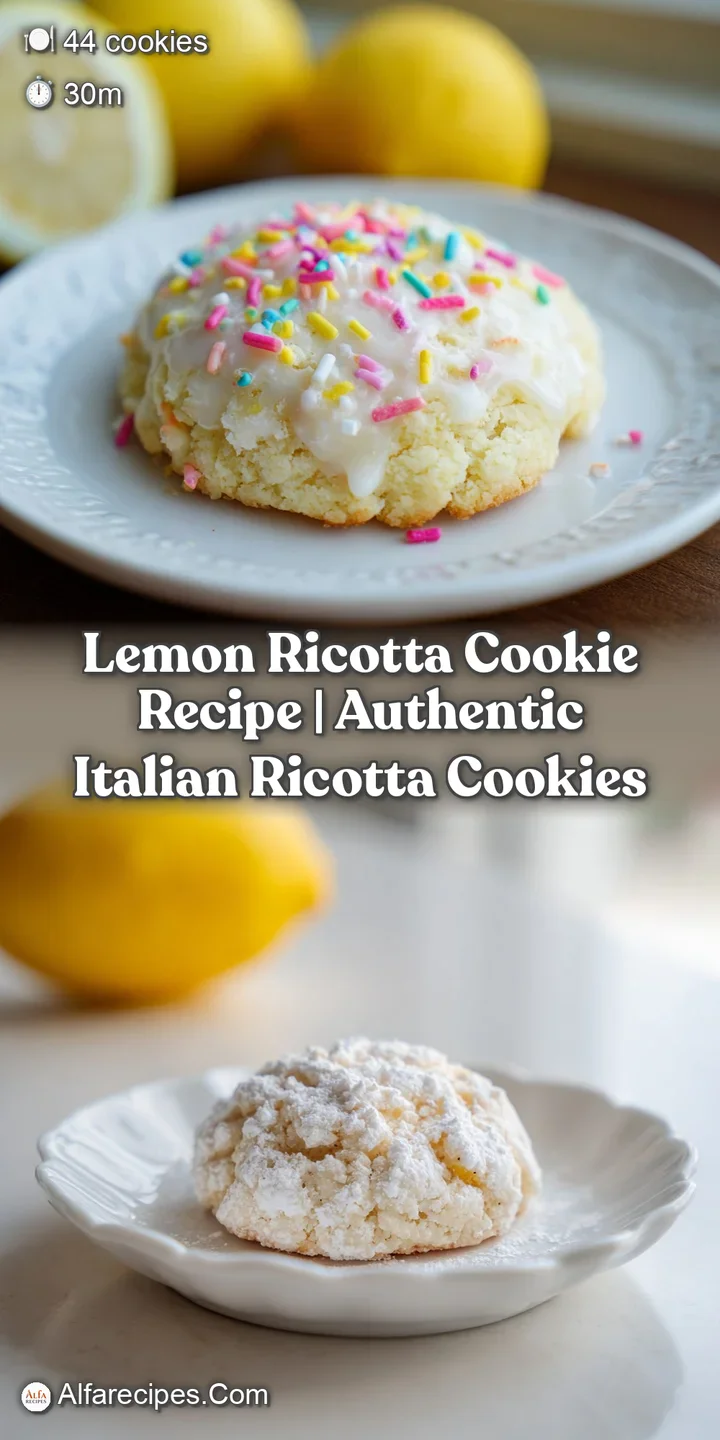
Recipe FAQs
Is lemon ricotta cookie dough sticky?
Yes, the dough will be soft and tacky. This characteristic texture is due to the moisture in the whole milk ricotta, so avoid adding extra flour which can make the finished cookies dry.
Should you refrigerate ricotta cookie dough before baking?
No, you can bake it immediately. Unlike traditional sugar cookies that require chilling to prevent spreading, this dough is formulated to be portioned and baked right after mixing.
How to keep ricotta cookies from getting soggy?
Store them in the refrigerator if your kitchen is humid. High humidity can cause the sugar glaze to weep, so keeping them cool helps maintain their texture. If you enjoyed the precise moisture control needed here, see how we apply similar principles for a perfect crumb in our Chocolate Zucchini Muffins.
Can I use low-fat ricotta for this recipe?
No, stick with whole milk ricotta. low-fat versions contain significantly more water, which will alter the dough consistency and cause the cookies to spread into thin, cakey puddles.
How to ensure the lemon flavor is bright and noticeable?
Rub the lemon zest into the granulated sugar with your fingertips before mixing. This releases the citrus essential oils, infusing the sugar and ensuring the lemon flavor permeates the entire cookie dough.
How to tell when these cookies are done baking?
Watch for set tops and barely golden tan bottoms. Pull them from the 350°F oven after 12-15 minutes; they should remain soft and light in color rather than crisp.
Can I freeze the cookies for later?
Yes, they freeze exceptionally well. Store the baked, unglazed cookies in an airtight container for up to 3 months and simply add the fresh lemon glaze once they have thawed to room temperature.
Lemon Ricotta Cookies

Ingredients:
Instructions:
Nutrition Facts:
| Calories | 151 kcal |
|---|---|
| Protein | 2.3 g |
| Fat | 5.5 g |
| Carbs | 23.4 g |
| Fiber | 0.3 g |
| Sugar | 14.8 g |
| Sodium | 34 mg |
