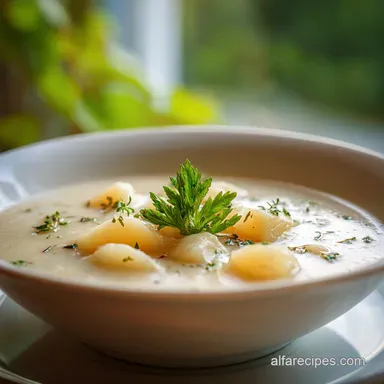
Easy Baked Potato Soup: Creamy and Hearty
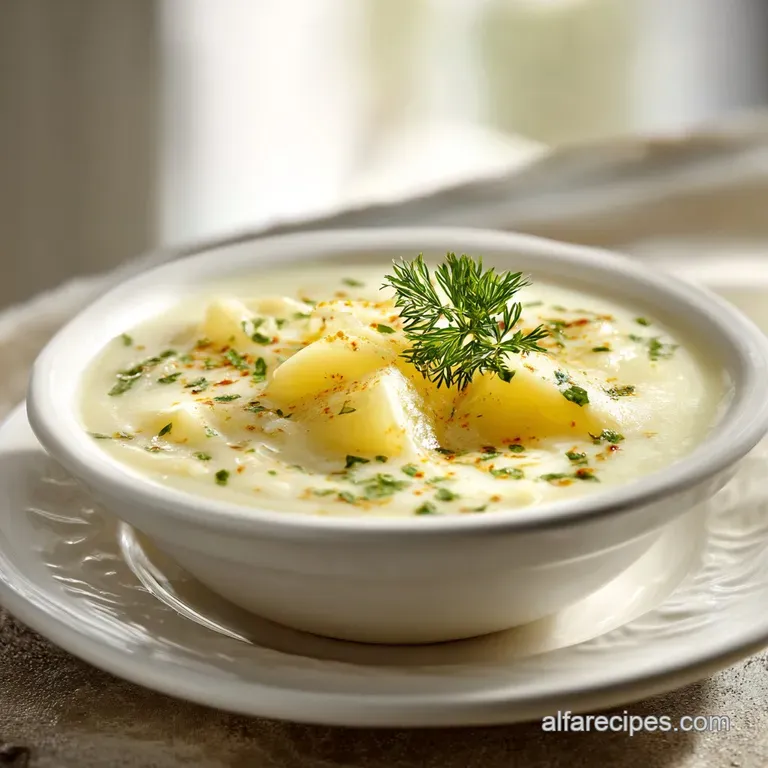
- Time: 15 min active + 30 min cook = Total 45 mins
- Flavor/Texture Hook: Savory, velvety broth with chunky potato bites and smoky bacon
- Perfect for: Cold weeknights, family gatherings, or a budget-friendly comfort meal
- The Secret to Easy Baked Potato Soup
- Why This Version Hits Home
- Fresh vs Shortcut Comparison
- Component Analysis
- The Full Shopping List
- Kitchen Tools Required
- Step-by-Step Cooking Guide
- Fixing Common Texture Issues
- Troubleshooting Common Issues
- Customizing Your Bowl
- Adjusting For Different Groups
- Potato Soup Myths
- Storage and Zero Waste
- Great Pairing Ideas
- Recipe FAQs
- 📝 Recipe Card
The Secret to Easy Baked Potato Soup
Listen, we've all been there. You try to make a creamy potato soup, but you over blend it, and suddenly you're eating something that has the consistency of wallpaper paste. I remember one rainy Tuesday when I tried to be "too efficient" with my blender. I turned that pot of soup into a gummy, sticky mess that clung to the roof of my mouth. It was honestly a disaster, and I almost gave up on the dish entirely.
The trick isn't in the blender, it's in how you handle the starch and the heat. After a few more tries, I realized that the key to a truly hearty, no fuss meal is leaving some of those potatoes alone and tempering the dairy. You want a soup that feels like a hug in a bowl, not a science experiment gone wrong.
This easy baked potato soup is my targeted fix for that gummy texture. It's designed for a crowded table where you want the flavor of a loaded potato but don't want to spend three hours hovering over a stove. We're going for a rich, savory profile with a texture that's velvety but still has a bit of bite.
Why This Version Hits Home
When you're making this, you're essentially managing the starch released by the potatoes. If you stir too aggressively or blend too much, those starch granules burst and create a gluey texture.
Starch Control: By simmering the potatoes gently and only pulsing the blender, we keep the texture chunky and the broth silky. According to Serious Eats, the choice of potato significantly affects the final viscosity due to different amylose levels.
Fat Emulsification: The combination of butter, heavy cream, and sour cream creates a stable emulsion. This prevents the soup from separating or looking oily when it hits the bowl.
Aromatic Layering: Sautéing the onions in butter first creates a savory foundation. This ensures the flavor is deep and integrated, rather than just tasting like boiled potatoes.
Dairy Tempering: Adding the cheese and sour cream off the heat prevents the proteins from tightening up. This is what keeps the soup from curdling and ensures a smooth finish.
Fresh vs Shortcut Comparison
Before we get into the gear, you might be wondering if you can skip the peeling and chopping. I've tried both, and here is how they actually stack up in real life kitchen scenarios.
| Feature | Fresh Russets | Frozen Hash Browns | Impact |
|---|---|---|---|
| Prep Time | 15 minutes | 2 minutes | Massive time save with frozen |
| Texture | Hearty, distinct chunks | More uniform, softer | Fresh feels more "homemade" |
| Flavor | Natural potato earthiness | Slightly salty/processed | Fresh is more savory |
| Cost | Extremely low | Moderate | Fresh is better for a tight budget |
It's a trade off between time and soul. If you're in a rush, the frozen route works, but for a family dinner, I always stick with the fresh stuff.
Component Analysis
Understanding what each part does helps you tweak the recipe on the fly. Here is the breakdown of why these specific items are in the pot.
| Ingredient | Science Role | Pro Secret |
|---|---|---|
| Russet Potatoes | Primary starch source | Peel them deeply to avoid any green bits |
| Heavy Cream | Fat for mouthfeel | Don't boil it, or it might separate |
| Sharp Cheddar | Salt and thickness | Grate your own; pre shredded has cornstarch |
| Sour Cream | Acidity and body | Adds a tangy contrast to the rich cream |
The Full Shopping List
Right then, let's look at what you need. I've kept this budget smart, using ingredients you probably already have in the pantry.
- 4 tbsp (56g) unsalted butter Why this? Provides a rich, nutty base for the aromatics
- 1 medium (150g) yellow onion, finely diced Why this? Balanced sweetness that doesn't overpower
- 3 cloves (9g) garlic, minced Why this? Essential savory depth
- 3 lbs (1.36kg) russet potatoes, peeled and cubed into 1/2 inch pieces Why this? High starch content for natural thickening
- 4 cups (950ml) chicken broth, low sodium Why this? Controls the salt levels so you can season at the end
- 1 cup (240ml) heavy cream Why this? Creates that signature velvety texture
- 2 tbsp (16g) all purpose flour Why this? A tiny bit of extra stability for the broth
- 1/2 tsp (3g) salt Why this? Enhances all other flavors
- 1/4 tsp (1g) black pepper Why this? Subtle heat to cut through the fat
- 8 oz (225g) sharp cheddar cheese, shredded Why this? Sharpness cuts through the creamy base
- 1/2 cup (120g) sour cream Why this? Adds a necessary lactic tang
- 6 slices (30g) bacon, cooked and crumbled Why this? Smoky, salty crunch
- 3 stalks (20g) green onions, thinly sliced Why this? Fresh, sharp finish
Smart Substitutions:
- Chicken broth → Vegetable broth: Same liquid ratio, keeps it vegetarian friendly.
- Heavy cream → Half and half: Lighter result, but slightly less velvety.
- Sharp cheddar → Gruyère: More nutty and sophisticated, but more expensive.
- Russets → Yukon Gold: Creamier texture, but the soup will be thinner.
Kitchen Tools Required
You don't need a fancy setup for this. A few basic tools will do the job perfectly.
- A large Dutch oven or heavy bottomed pot: This distributes heat evenly so the bottom doesn't burn.
- An immersion blender: This is the real hero. It lets you control the texture right in the pot.
- A sharp chef's knife: For those uniform 1/2 inch potato cubes.
- A box grater: Because pre shredded cheese is the enemy of a smooth melt.
Chef's Note: If you don't have an immersion blender, you can use a regular blender, but work in small batches and leave room at the top. Hot liquids expand, and nobody wants a "soup explosion" in their kitchen.
Step-by-step Cooking Guide
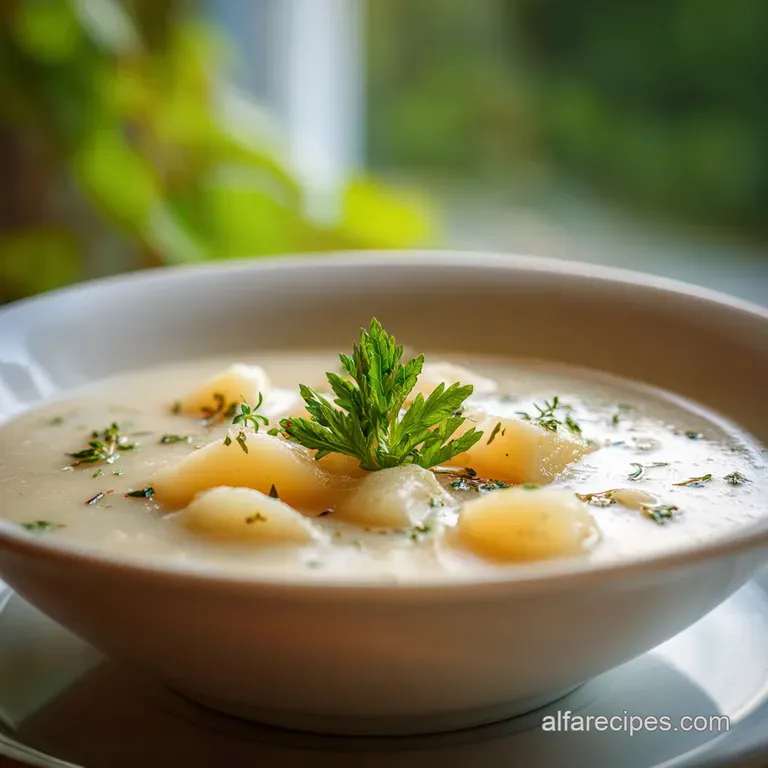
Let's crack on. Follow these steps for the best easy baked potato soup experience.
- Melt the butter over medium heat in your Dutch oven. Add the diced onion and sauté for 4-5 mins until translucent and smelling sweet. Note: Don't brown the onions; we want a subtle base, not a caramelized one.
- Stir in the minced garlic and cook for about 60 seconds until fragrant. Note: Garlic burns quickly, so keep it moving.
- Add the cubed potatoes and chicken broth to the pot. Increase the heat to bring it to a boil, then immediately reduce to a simmer.
- Cover the pot and cook for 12-15 mins until the potatoes are fork tender. Note: If they resist the fork, give them another 2 minutes.
- Whisk the flour into a small ladle of the hot broth to create a smooth slurry, then stir it back into the pot. Note: This prevents flour clumps from floating in your soup.
- Pour in the heavy cream and stir continuously over low heat for 2-3 mins until the liquid looks silky.
- Use your immersion blender to pulse the soup. Do this for about 30 seconds, leaving some potato chunks for texture. Note: Do not over blend, or you'll get that gummy texture we talked about.
- Remove the pot from the heat entirely. Stir in the shredded cheddar and sour cream until completely melted and incorporated.
- Season with salt and pepper to taste.
- Ladle into bowls and garnish with crumbled bacon and sliced green onions.
Fixing Common Texture Issues
Even with a great recipe, things can go sideways. Most issues with an easy baked potato soup come down to temperature or blending.
Troubleshooting Common Issues
| Issue | Solution | |
|---|---|---|
| Why Your Soup Is Gummy | This happens when the potato starch is overworked. If you use a high speed blender for too long, the cells rupture and release too much amylose. To fix this, you can't "un blend" it, but adding a spla | |
| Why Your Dairy Curdled | Curdling usually happens when the soup is boiling when you add the cream or cheese. The high heat causes the proteins to clump. Always remove the pot from the burner before stirring in the cheddar and | |
| Why Your Soup Is Too Thin | If your potatoes were small or you used Yukon Golds, the soup might be too watery. You can simmer it uncovered for a few more minutes to reduce the liquid, or whisk in a tiny bit more flour slurry. |
Customizing Your Bowl
One of the best things about this recipe is how flexible it is. You can keep it simple or turn it into a full blown feast.
The Ultimate Shortcut If you're really pressed for time, you can use frozen cubed hash browns. Skip the simmering step and just add them to the broth. It'll take about 10 minutes instead of 15, and while the texture is a bit softer, it's still a winner for a quick weeknight meal.
Making it Lighter To reduce the richness, swap the heavy cream for whole milk and reduce the cheese by half. You'll still get the comfort, but it won't feel quite as heavy. This is a great way to keep the meal family-friendly for those who prefer lighter fare.
Adapting for Slow Cookers For an easy baked potato soup slow cooker version, toss the butter, onions, garlic, potatoes, and broth into the crockpot. Cook on Low for 6-7 hours.
Stir in the cream, flour slurry, cheese, and sour cream during the last 30 minutes of cooking.
If you're planning a bigger spread, this soup pairs brilliantly with a Chicken Cobbler recipe for a truly hearty comfort feast.
Adjusting For Different Groups
Scaling a soup is generally easy, but you can't just multiply everything by four and hope for the best.
Scaling Down (Half Batch) If you're just cooking for two, use a smaller pot. Reduce the cooking time for the potatoes by about 20% because a smaller volume of liquid reaches temperature faster. For the egg or thickener, just be precise with your measurements.
Scaling Up (Double or Triple) When doubling the recipe for a party, be careful with the salt and spices. I recommend increasing salt and pepper to only 1.5x the original amount first, then tasting and adding more.
Liquids can be reduced by about 10% because there is less evaporation in a larger, crowded pot.
Baking Adjustments While this is a stovetop soup, some people like to finish it in the oven to get a browned cheese crust. Transfer the soup to a baking dish, top with extra cheddar, and broil at 400°F (200°C) for 3-5 mins until the top is bubbling and golden.
Potato Soup Myths
There are a few things people tell you about potato soup that just aren't true. Let's clear them up.
Myth: You must use a roux to thicken it. Actually, russet potatoes are naturally full of starch. If you use the pulsing method I described, the potatoes themselves provide plenty of thickness. The 2 tbsp of flour in this recipe is just a "safety net" for stability.
Myth: Any potato works equally well. Not really. Red potatoes are "waxy" and hold their shape, which is great for salads but bad for soup. Russets break down just enough to thicken the broth, making them the gold standard for a creamy result.
Myth: Searing the potatoes first adds flavor. Searing them can add a nice color, but in a creamy soup, that crust often just disappears or makes the broth cloudy. Sautéing the aromatics is where the real flavor happens.
Storage and Zero Waste
Don't let the leftovers go to waste. This soup keeps surprisingly well if you handle the reheating correctly.
Refrigeration Store the soup in an airtight container in the fridge for up to 4 days. You'll notice it thickens significantly as it cools, this is normal. When you reheat it on the stove, add a splash of milk or broth to bring back that velvety consistency.
Freezing Guidelines I'll be honest: freezing dairy heavy soups can be tricky. The cream and sour cream can separate. If you plan to freeze this, leave out the dairy and cheese. Freeze the potato and broth base for up to 3 months.
Thaw it in the fridge overnight, then add the cream and cheese just before serving.
Zero Waste Tips Don't throw away those potato peels! Toss them in a bit of oil and salt, then air fry or bake them at 400°F (200°C) for 10 mins. You get crispy, salty potato skins that make a great snack while you wait for the soup to simmer.
Also, save the bacon grease from your pan and use it to sauté the onions instead of butter for an extra smoky punch.
Great Pairing Ideas
Since this easy baked potato soup is so rich, you want sides that provide a bit of contrast, think acidity, crunch, or lean protein.
A crisp green salad with a sharp lemon vinaigrette is the classic choice. The acid cuts through the heavy cream and cheese, refreshing your palate between bites. Or, if you want to keep the "comfort" theme going, a piece of toasted sourdough rubbed with a raw garlic clove is unbeatable.
For a more complete meal, I love serving this alongside some Lemon Pepper Chicken. The brightness of the lemon and the lean protein balance out the decadence of the soup perfectly.
Decision Shortcut for Serving:
- If you want a light meal → Serve with a side of steamed broccoli.
- If you want a feast → Serve with garlic bread and a wedge salad.
- If you're feeding kids → Serve with apple slices and carrot sticks.
Trust me on this, the key to a great meal is all in the balance. This soup is the star, so let the sides be the supporting cast. Now, go get your pot on the stove and enjoy some real life comfort food!
Recipe FAQs
What is the secret ingredient in potato soup?
The combination of sour cream and sharp cheddar. These ingredients provide the tangy richness and depth that recreate the flavor of a loaded baked potato.
Are baked potatoes good for diabetics?
It depends on portion control and individual health needs. Potatoes are high-glycemic carbohydrates, so it is best to consult a medical professional for specific dietary guidance.
What are common mistakes when making potato soup?
Over-blending the potatoes or boiling the dairy. Over-processing ruins the texture by making it gummy, while adding cream to boiling liquid can cause the proteins to curdle.
What all ingredients do you need for potato soup?
You need russet potatoes, chicken broth, heavy cream, butter, onion, garlic, flour, salt, pepper, sharp cheddar, sour cream, bacon, and green onions. These items create the creamy base and classic savory garnishes.
What is the best side dish to serve with this soup?
Warm, crusty bread is the ideal pairing. This soup pairs perfectly with garlic pull-apart rolls to balance the creamy texture.
How to prevent the soup from becoming too thick when reheating?
Stir in a splash of chicken broth or milk. Because the soup thickens significantly in the refrigerator, adding a small amount of liquid restores the original velvety consistency.
Is it true that you must use a high-speed blender for a smooth texture?
No, this is a common misconception. An immersion blender used in short pulses is actually preferred to avoid rupturing potato cells and creating a gummy consistency.
Easy Baked Potato Soup: Creamy