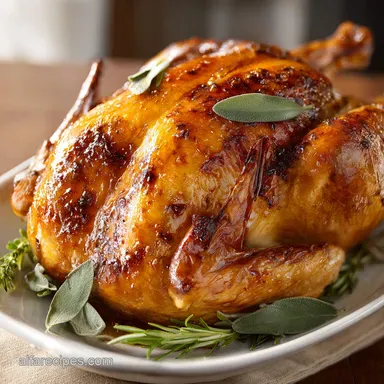
Roast Turkey: Ultimate and Easy
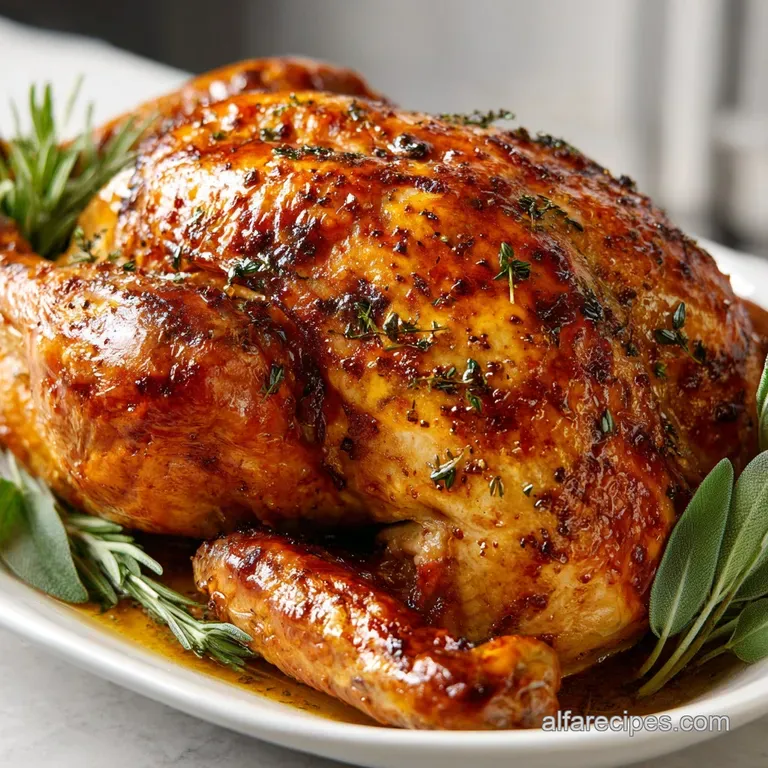
- Time:30 mins active + 180 mins roasting + 45 mins resting = Total 4 hours 15 mins
- Flavor/Texture Hook: Herb infused compound butter with a golden, sizzling exterior
- Perfect for: Large family gatherings, holiday feasts, or any occasion with a crowded table
- A Hearty Family Roast Turkey Guide
- Why This Method Just Works
- The Ingredient Breakdown
- Minimal Tools For Roasting
- Step By Step Roasting
- Fixing Common Roasting Issues
- Troubleshooting Common Issues
- Easy Ingredient Swaps
- Adjusting For Bird Size
- Truths About Roasting
- Storage and Reheating Tips
- The Best Side Pairings
- High in Sodium
- Recipe FAQs
- 📝 Recipe Card
A Hearty Family Roast Turkey Guide
The smell of sage, rosemary, and browning butter hitting a hot oven is, for me, the official scent of home. Growing up, the big bird wasn't just a meal, it was a theatrical event. I remember the tension in the kitchen, the chaotic energy of cousins running around, and that one specific moment when the platter finally hit the table and everyone went silent.
It's a tradition that binds people together, but for a long time, it also bound us to the fear of a dry, tasteless bird.
I used to think that the only way to get a good result was to spend three days brining the meat in a giant bucket of salt water. But after years of seeing how much flavor is lost in the brine, I shifted to a method that focuses on fat and temperature control.
The goal isn't just to cook the meat, but to create a contrast between the crispy skin and the tender interior.
This Roast Turkey recipe is designed for the real life home cook. We aren't using fancy equipment or ten step processes. We're using a few reliable tricks, like compound butter and a temperature drop, to get a result that feels like it came from a professional kitchen but was actually made with a few basic tools.
It's about togetherness and a hearty meal that doesn't keep you trapped in the kitchen while your guests are enjoying themselves.
Why This Method Just Works
I've spent a lot of time wondering why some birds come out like cardboard and others feel silky. It really comes down to how you manage the heat and where you put the fat.
The over High heat Blast: Starting at a high temperature shocks the skin, forcing the fat to render quickly. This is what gives you that golden, sizzling surface without overcooking the inside.
Under Skin Fat: Putting butter directly on the breast meat protects the leanest part of the bird from the dry heat of the oven. It acts as a thermal barrier and an internal baster.
The Carry Over Effect: Removing the bird at 160°F (71°C) is the secret. The internal temperature continues to rise while it rests, bringing it up to the safe zone without drying out the breast.
Aromatic Steaming: Filling the cavity with onions, carrots, and lemon creates a small steam chamber inside the bird. This moistens the meat from the inside out while it roasts.
| Method | Time | Texture | Best For |
|---|---|---|---|
| Classic Whole | 4 hours 15 mins | Traditional, balanced | Large family feasts |
| Spatchcocked | 2.5 hours | Extra crispy skin | Faster weeknight meals |
| Breast Only | 1.5 hours | Very juicy, lean | Small groups (4-6) |
The Ingredient Breakdown
Understanding what each part does helps you make better decisions if you're missing something in your pantry.
| Ingredient | Science Role | Pro Secret |
|---|---|---|
| Unsalted Butter | Moisture & Browning | Softened butter spreads easier without tearing the skin |
| Kosher Salt | Protein Structure | Coarser grains allow for more even distribution |
| Fresh Herbs | Aromatic Depth | Chop them finely so they blend into the butter |
| Lemon Juice | Acid Balance | Cuts through the heavy fat of the butter |
Minimal Tools For Roasting
You don't need a professional kitchen to nail this. A sturdy roasting pan with a rack is the most important tool. The rack is non negotiable because it allows the hot air to circulate under the bird, preventing a "soggy bottom." If you don't have a rack, a bed of chunky vegetables does a decent job of lifting the meat.
I usually use a simple instant read thermometer. Trusting the clock is a mistake I made early on, and it led to a few very dry holidays. A thermometer is the only way to know for sure when your Roast Turkey is done. For the compound butter, a small mixing bowl and a fork are all you need.
Keep it simple and focus on the bird.
Step by step Roasting
The key to this process is patience and precision. Don't rush the prep, and definitely don't rush the rest.
1. Preparing the Bird
Pat the turkey extremely dry with paper towels. This is the most important step for the skin. If the skin is damp, the heat spends its energy evaporating water instead of browning the skin. You want it bone dry.
In a small bowl, mix your softened butter, minced garlic, sage, rosemary, thyme, black pepper, and lemon juice. Mash it together until it's a smooth, fragrant paste. This compound butter is where all the flavor lives.
Carefully slide your fingers under the skin of the breast to create a pocket. Be gentle so you don't rip it. Stuff about half of that butter mixture directly onto the meat. Then, stuff the cavity with the remaining butter, the halved lemon, and the halved head of garlic. This scents the meat from the inside.
Rub the outside of the skin with a bit of oil and a generous coating of salt. The salt draws out any remaining surface moisture and helps the skin shatter when you bite into it.
2. Executing the Roast
Preheat your oven to 450°F (230°C). In the bottom of your roasting pan, scatter the quartered onion, carrots, celery, and garlic. Place the turkey breast side up on the rack over these vegetables.
Roast at 450°F for 20-30 minutes. You are looking for the skin to be golden and sizzling. This initial blast sets the color.
Now, lower the oven temperature to 325°F (160°C). This is where the slow cook happens. Continue roasting until an instant read thermometer inserted into the thickest part of the thigh reaches 160°F (71°C).
Note: I remove my turkey from the oven when its internal temperature reaches 160°F. The USDA recommends 165°F, but in my experience, the temperature will rise those last 5 degrees during the resting phase.
3. Mastering the Rest
Transfer the bird to a carving board. Tent it loosely with aluminum foil. Do not wrap it tightly, or the steam will soften the skin you worked so hard to crisp up.
Let it rest for 30-45 minutes. This is the hardest part of the Roast Turkey process because the house smells incredible, but it's mandatory. The juices need to redistribute from the center back to the edges of the meat.
If you cut it too soon, the juices will run out on the board, and the meat will be dry.
Chef's Note: Here is a fantastic tip I picked up from Alton Brown to protect the turkey breast and keep it juicy: Fold a large square of foil over the breast if it starts browning too quickly during the over low heat phase.
Fixing Common Roasting Issues
Even the best of us have mishaps. Usually, it's just a matter of adjusting the heat or the timing.
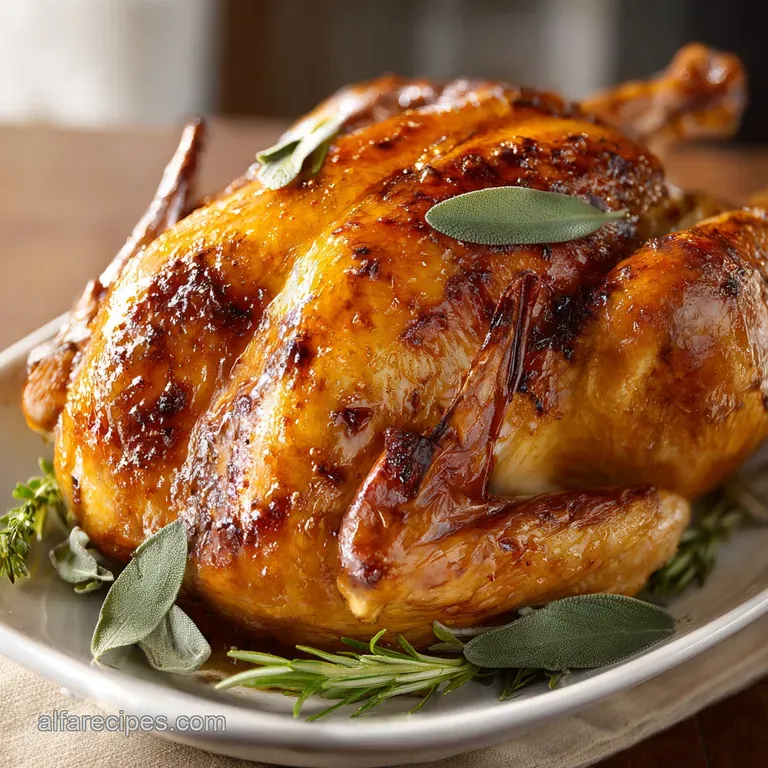
Troubleshooting Common Issues
| Issue | Solution |
|---|---|
| Why Your Bird Is Dry | This usually happens because the bird was left in the oven too long or the breast wasn't protected with butter. If you find the meat is dry, try serving it with a velvety gravy or a light jus to add m |
| Why Your Skin Is Pale | Pale skin happens when the oven temperature is too low or there's too much moisture on the skin before roasting. If you notice the skin isn't browning, you can carefully brush on a bit more melted but |
| Why Your Bottom Is Soggy | A soggy bottom is almost always caused by the bird sitting directly in its own juices. Using a roasting rack is the best fix. If you don't have one, make sure your vegetable bed is thick enough to lif |
Common Mistakes Checklist
- ✓ Forgetting to pat the skin completely dry before salting.
- ✓ Using a frozen bird without following USDA guidelines for thawing.
- ✓ Cutting into the meat immediately after removing it from the oven.
- ✓ Overstuffing the cavity, which can block heat from reaching the center.
- ✓ Forgetting to check the internal temperature of the thigh, not just the breast.
Easy Ingredient Swaps
Not everyone has a full herb garden or a fridge full of butter. You can still make a great Roast Turkey with a few adjustments.
| Original Ingredient | Substitute | Why It Works |
|---|---|---|
| Unsalted Butter | Olive Oil | Similar fat content. Note: Lacks the milky richness and browning power of butter |
| Fresh Sage/Rosemary | Dried Herbs (1 tsp = 1 tbsp fresh) | Concentrated flavor. Note: Less "bright" and floral than fresh |
| Kosher Salt | Table Salt (use 2/3 amount) | Basic seasoning. Note: Table salt is denser, so you need less to avoid over salting |
| Lemon Juice | Apple Cider Vinegar | Provides necessary acidity. Note: Adds a slight fruitiness |
If you're looking for a way to reduce the sodium, you can swap the salt rub for a lemon pepper blend. It won't be quite as crispy, but it's still hearty. For those adapting this for a Roast Turkey breast recipe, simply reduce the roasting time by about half and skip the cavity stuffing.
Adjusting For Bird Size
A 13 lb bird is the sweet spot, but real life means you might have a smaller or larger one.
For a smaller bird (8-10 lbs), you can reduce the over low heat roasting time by about 20%. Keep the over high heat blast the same, as that's about the skin, not the meat. Use a smaller roasting pan to keep the juices concentrated.
For a larger bird (16-20 lbs), don't just increase the time linearly. You might need to lower the second temperature to 300°F (150°C) to ensure the outside doesn't burn before the center is cooked. Increase the amount of compound butter by 50% to ensure the larger breast area stays moist.
I always recommend the "If you want X, do Y" logic here: - If you want a faster cook, spatchcock the bird (remove the backbone). - If you want maximum juiciness, let it rest for a full 45 minutes. - If you want a deeper flavor, add a splash of white wine to the pan vegetables.
Truths About Roasting
There are a lot of old wives' tales when it comes to the Roast Turkey. Let's clear a few things up.
One big myth is that searing the meat "seals in the juices." This isn't actually true. Searing creates flavor and a great crust, but it doesn't stop moisture from leaving the meat. The real "seal" comes from the resting period, where the muscle fibers relax and reabsorb the liquid.
Another common misconception is that you must stuff the bird with bread stuffing to get flavor. In reality, stuffing the bird can actually slow down the cooking process and potentially keep the center of the meat in the "danger zone" for too long.
I prefer using aromatic vegetables for flavor and cooking the bread stuffing in a separate dish.
Storage and Reheating Tips
Once the feast is over, you're left with a lot of food. To keep your Roast Turkey fresh, carve the remaining meat and store it in airtight containers in the fridge for up to 3-4 days. If you won't eat it by then, it freezes beautifully for 2-3 months.
For zero waste, never throw away the carcass. Roast the bones with the leftover pan vegetables and simmer them with water and a splash of vinegar for 4 hours to make a rich, homemade stock. You can use this stock for a soup or even as a base for a homemade chicken cobbler by substituting the poultry.
When reheating, avoid the microwave if you can. It tends to make the meat rubbery. Instead, place slices in a baking dish with a bit of chicken broth, cover with foil, and heat at 300°F (150°C) until warmed through. This keeps the meat velvety and prevents it from drying out.
The Best Side Pairings
A Roast Turkey is the star, but it needs a supporting cast. I love pairing this with something bright and fresh to cut through the richness of the butter. My steamed asparagus recipe is a great way to add some color and a crisp snap to the plate.
For something heartier, a classic mashed potato or a wild rice pilaf works wonders. If you have a crowded table, serving the bird on a large platter surrounded by roasted root vegetables is the easiest way to present it.
Right then, you've got everything you need to tackle the big bird. Just remember: pat it dry, butter it well, and for the love of all things tasty, let it rest. Your family will thank you for the effort, and you'll actually get to enjoy the dinner yourself.
Trust me on this, the waiting is the hardest part, but it's where the magic happens. Happy roasting!
High in Sodium
985 mg 985 mg of sodium per serving (43% 43% of daily value)
The American Heart Association recommends a daily limit of no more than 2,300 mg of sodium to maintain heart health and lower blood pressure.
Tips to Reduce Sodium
-
Reduce Kosher Salt-25%
Cut the kosher salt in half or replace it with a salt free seasoning blend to dramatically lower the sodium content.
-
Enhance with Citrus-10%
Increase the lemon juice and add more lemon slices to the cavity to provide a zesty flavor that mimics the perceived saltiness.
-
Double the Aromatics-5%
Increase the amount of onion, carrots, and celery to create a more robust natural flavor profile without needing extra salt.
-
Maximize Fresh Herbs
Use generous amounts of fresh sage, rosemary, and thyme to add aromatic depth and complexity to the turkey.
Recipe FAQs
How many hours does it take to roast a turkey?
About 3 hours of cooking. Including prep and resting, the entire process takes approximately 4 hours and 15 minutes.
Is it better to roast a turkey at 350 or 325?
Stick with 325°F. Start with a high heat blast at 450°F for 20-30 minutes to crisp the skin before lowering the temperature for the remainder of the roast.
Should I cover turkey with foil when cooking?
No, leave it uncovered while roasting. Only tent the bird loosely with foil after it is removed from the oven to let the juices redistribute.
Is it 30 minutes per pound for turkey?
No, this is a common misconception. Always use an instant read thermometer to ensure the thickest part of the thigh reaches 160°F regardless of the bird's weight.
How to keep the breast meat moist?
Rub compound butter directly under the skin. Loosening the skin and applying butter creates a protective barrier that prevents the meat from drying out.
How to achieve golden brown skin?
Pat the turkey extremely dry with paper towels. Rub the exterior with oil and salt before roasting at 450°F to ensure the skin sizzles and browns.
What is the best way to use the leftover carcass?
Simmer the bones and pan vegetables for 4 hours. This produces a rich homemade stock ideal for a turkey noodle vegetable soup.
Classic Roast Turkey