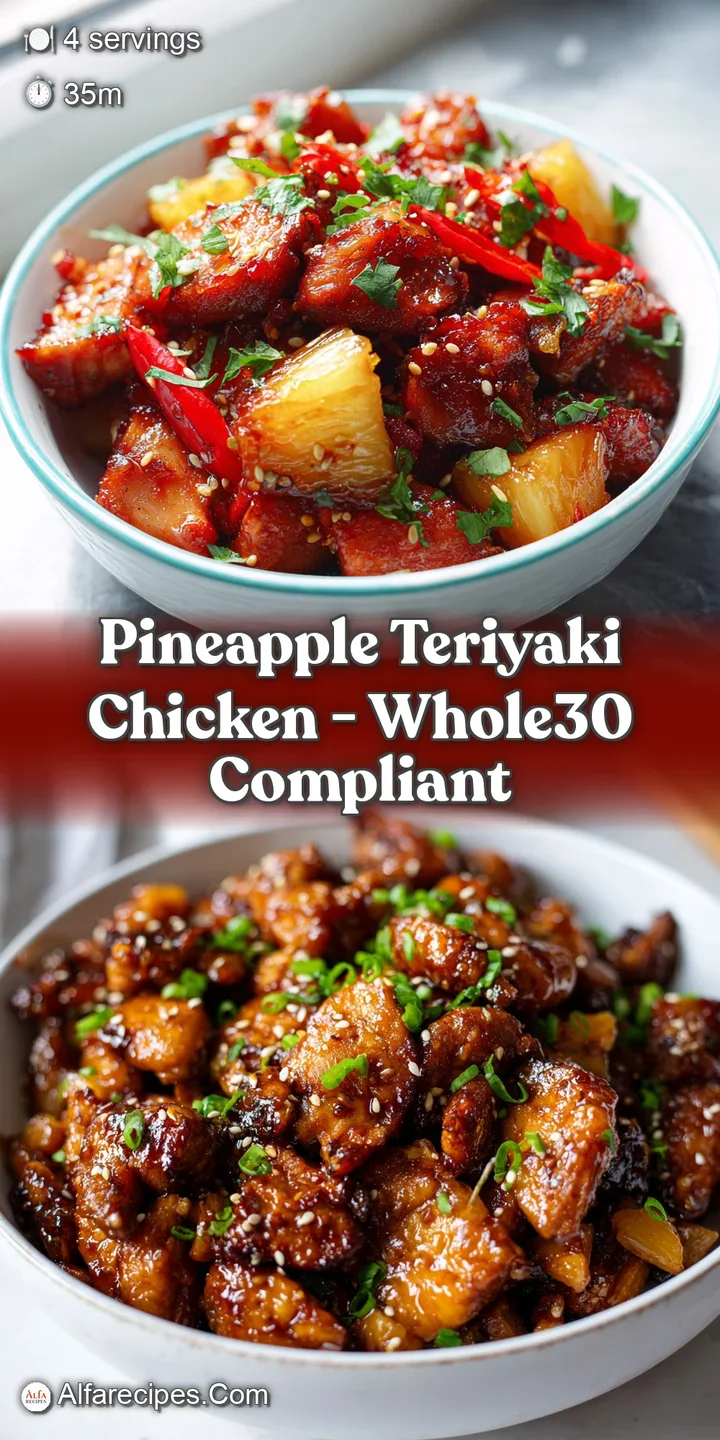
Whole30 Pineapple Teriyaki Chicken
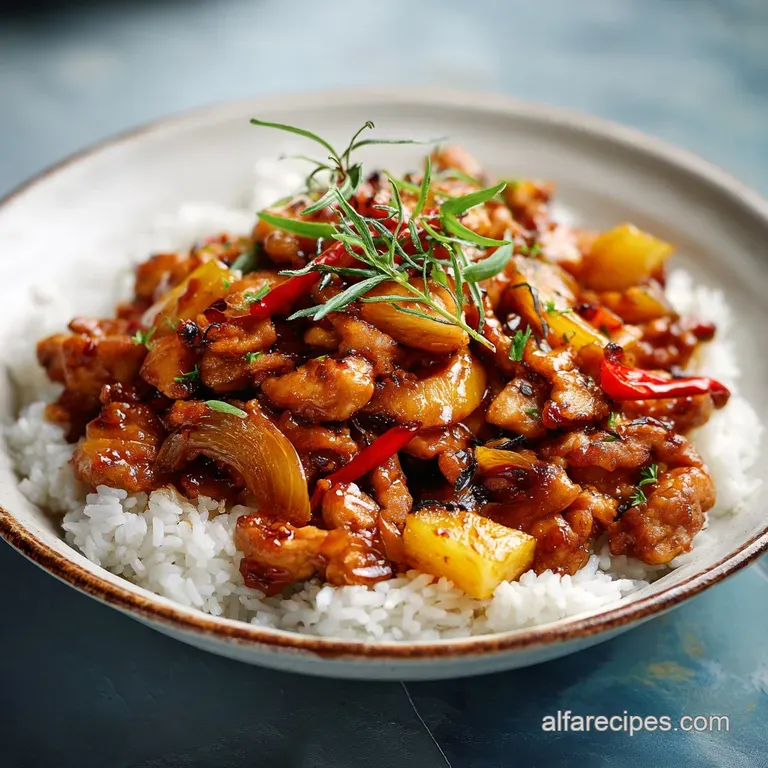
- Time: Active 15 minutes, Passive 20 minutes, Total 35 minutes
- Flavor/Texture Hook: Caramelized, zesty, and velvety glaze
- Perfect for: Quick weeknight family dinners
- How to Make Pineapple Teriyaki Chicken
- Our New Weeknight Family Favorite
- A Quick Dinner Time Plan
- The Essential Simple Ingredient List
- Minimal Gear for Maximum Flavor
- Step-by-Step Cooking Guide
- Fixing Common Cooking Mistakes
- Easy Recipe Adaptations
- Proper Leftover Care Tips
- Best Side Dish Pairings
- Very High in Sodium
- Recipe FAQs
- 📝 Recipe Card
How to Make Pineapple Teriyaki Chicken
The kitchen is filled with the sharp, sweet scent of ginger hitting hot oil, and the sizzle of the pan tells me we're about to have a very good night. It was one of those rainy Tuesdays where everyone was tired, the kids were circling the counter like hungry sharks, and the idea of a complicated meal felt impossible.
I threw this Whole30 pineapple teriyaki chicken together using what was in the pantry, and the way the pineapple juice reduced into a thick, glossy coat over the chicken was pure magic.
We’ve all had those takeout cravings that leave us feeling a bit sluggish the next day, right? That is why I am so obsessed with this version. It hits every single salty, sweet, and tangy note you want from a classic teriyaki, but it keeps things light enough that you actually have energy for the bedtime routine.
My family doesn't even realize they're eating something healthy, they just see a crowded table and a bowl of chicken that disappears in minutes.
This recipe is all about the balance between the acidity of the fruit and the deep umami of the coconut aminos. It is hearty enough to satisfy a big appetite but simple enough that you won't be stuck at the stove for an hour.
If you are looking for a reliable, no fuss meal that brings everyone together, you have found it. Let's get into the specifics so you can get this on your table tonight.
Our New Weeknight Family Favorite
There is something so comforting about a meal that looks like it took hours but actually came together during a commercial break. This Pineapple Teriyaki Chicken relies on the natural sugars in the fruit to create that signature "stick to your ribs" feel.
When you use coconut aminos instead of soy sauce, you get a softer, slightly sweeter profile that pairs beautifully with the zing of fresh ginger.
I've learned the hard way that the secret to a great stir fry isn't just the sauce - it's the heat management. If the pan isn't hot enough, the chicken just boils in its own juices, turning a sad, unappealing gray. We want a golden crust that traps all those juices inside.
This dish isn't about being fancy, it's about real life, messy kitchens, and the joy of a home cooked meal that actually tastes better than the restaurant version.
- Natural Reduction
- As the pineapple juice boils, water evaporates, concentrating the natural fructose into a sticky syrup that clings to the protein.
- Enzymatic Tenderizing
- Bromelain found in pineapple breaks down tough protein fibers, making the chicken thighs exceptionally soft.
- Amino Acid Punch
- Coconut aminos provide the savory "fifth taste" known as umami without the inflammatory properties of gluten or soy.
- Aromatic Infusion
- Grating fresh ginger directly into the pan releases volatile oils that penetrate the meat more effectively than dried spices.
| Cooking Method | Time | Texture Outcome | Best For |
|---|---|---|---|
| Stovetop Skillet | 20 minutes | Crispy edges, thick glaze | Maximum flavor and speed |
| oven-roasted | 25 minutes | Evenly tender, softer fruit | Set it and forget it prep |
| Slow Cooker | 4 hours | Shredded style, very saucy | Meal prep and sandwiches |
While the stovetop method is my absolute go to for those crispy bits, the oven is a lifesaver when I'm multitasking with laundry or homework. Both methods result in a Healthy Whole30 teriyaki chicken that the whole family will ask for again next week.
A Quick Dinner Time Plan
| Component | Science Role | Pro Secret |
|---|---|---|
| Coconut Aminos | Umami Base | Simmer longer than soy sauce to thicken properly. |
| Pineapple Juice | Acidic Sweetener | Use unsweetened to control the sugar to acid balance. |
| Ginger Root | Pungency | Grate it frozen to get a fine paste without strings. |
| Avocado Oil | over High heat Fat | Its high smoke point prevents the sauce from tasting burnt. |
To get this on the table in under 40 minutes, I like to follow a specific flow. While the chicken is browning, I whisk the sauce. This "parallel processing" keeps the active work time low. Much like the technique in our Paleo Chicken Yakitori recipe, getting the pan temperature right is the difference between a soggy mess and a restaurant quality sear.
The Essential Simple Ingredient List
- 1.5 lbs chicken thighs: Cut into 1 inch pieces. Why this? Thighs stay juicy under high heat compared to lean breasts.
- Substitute: Chicken breasts (cook 2 minutes less to avoid dryness).
- 3/4 cup coconut aminos: The soy free base. Why this? Provides deep color and salty sweet flavor without soy allergens.
- Substitute: Tamari (if not doing Whole30).
- 1/2 cup pineapple juice: Unsweetened is best. Why this? Acts as the primary liquid for the glaze reduction.
- Substitute: Orange juice for a citrus twist.
- 1.5 cups fresh pineapple chunks: Sweet and tart. Why this? Adds texture and bursts of brightness to the dish.
- Substitute: Canned pineapple (drain well and pat dry).
- 1 tbsp fresh ginger: Grated finely. Why this? Cuts through the sweetness with a spicy, fresh bite.
- Substitute: 1 tsp ground ginger (though fresh is far superior).
- 3 cloves garlic: Minced. Why this? Essential aromatic base for any teriyaki profile.
- Substitute: 1 tsp garlic powder.
- 1 tsp rice vinegar: For balance. Why this? The acidity brightens the heavy flavors of the aminos.
- Substitute: Apple cider vinegar.
- 2 tbsp avocado oil: High smoke point. Why this? Allows for a hard sear without the oil smoking out the kitchen.
- Substitute: Ghee or refined coconut oil.
- Sea salt & Black pepper: To taste (1 tsp salt, 1/2 tsp pepper).
- Green onions & Sesame seeds: For the finish.
Minimal Gear for Maximum Flavor
You don't need a kitchen full of gadgets for this. I suggest a large cast iron skillet or a heavy bottomed stainless steel pan. The weight of the pan helps maintain a consistent temperature when you drop the cold chicken in.
If you use a thin, cheap pan, the temperature will plummet, and you'll end up steaming your meat instead of searing it.
A microplane or fine grater is also a lifesaver here for the ginger and garlic. It turns them into a paste that melts into the sauce rather than leaving you with big, bitter chunks of garlic. If you want a version that uses traditional soy, try this Chicken Teriyaki Recipe. But for this Paleo pineapple teriyaki chicken, keep your heavy skillet handy.
step-by-step Cooking Guide
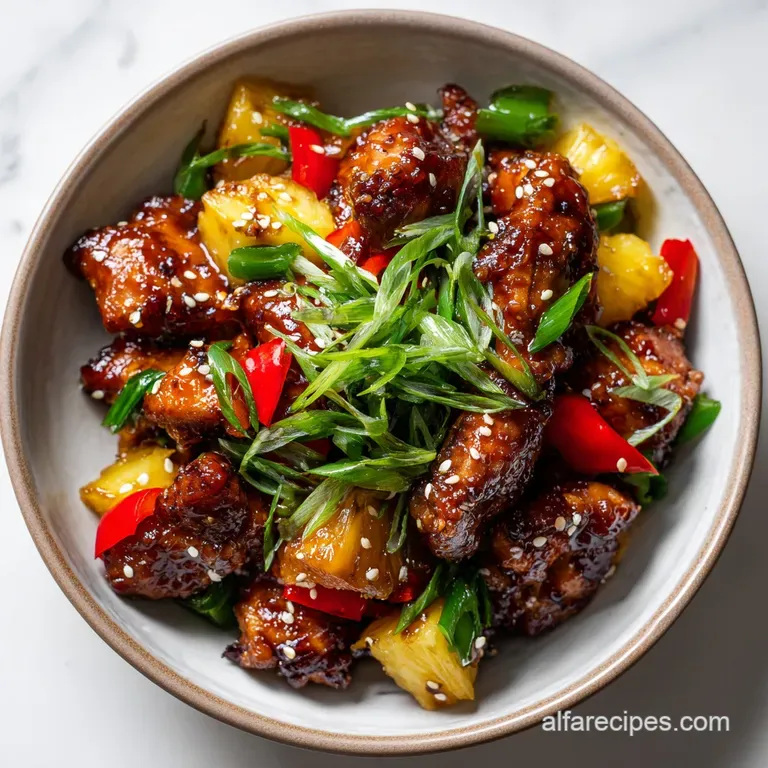
- Prep the meat. Pat the 1.5 lbs of chicken thighs dry with paper towels. Note: Moisture is the enemy of a good sear.
- Season well. Toss the chicken with 1 tsp sea salt and 1/2 tsp black pepper in a small bowl.
- Heat the pan. Add 2 tbsp avocado oil to your skillet over medium high heat until it shimmers and wisps of smoke appear.
- Sear the chicken. Work in batches to brown the chicken for 5-6 minutes until a golden crust forms on all sides.
- Remove chicken. Set the chicken aside on a plate; it won't be fully cooked through yet.
- Sauté aromatics. Add the grated ginger and 3 cloves of minced garlic to the residual oil for 30 seconds until fragrant but not brown.
- Deglaze the skillet. Pour in 3/4 cup coconut aminos, 1/2 cup pineapple juice, and 1 tsp rice vinegar, scraping the bottom with a wooden spoon.
- Thicken the glaze. Simmer the liquid for 5-8 minutes until it reduces by half and looks velvety.
- Combine and finish. Return the chicken to the pan along with 1.5 cups pineapple chunks.
- Final glaze. Cook for another 3-4 minutes until the sauce is sticky and the chicken reaches 165°F (74°C). Garnish with green onions and sesame seeds.
Fixing Common Cooking Mistakes
Why Your Sauce Is Runny
Coconut aminos have a higher water content than traditional soy sauce. If your glaze isn't clinging to the spoon, it simply hasn't spent enough time bubbling. You need to let those bubbles get big and slow, which indicates the water has evaporated and the sugars are beginning to caramelize.
| Problem | Root Cause | Solution |
|---|---|---|
| Gray, boiled chicken | Pan was too crowded | Sear in two batches to keep heat high. |
| Bitter sauce | Garlic burned | Add garlic only after the pan has cooled slightly. |
| Tough meat | Used chicken breast | Switch to thighs or reduce cook time by 3 minutes. |
✓ Always pat the chicken dry before it hits the oil to ensure a crispy exterior. ✓ Don't move the chicken for the first 2 minutes; let the crust develop naturally. ✓ Use fresh ginger rather than the jarred paste for a cleaner, sharper flavor.
✓ If using frozen pineapple, thaw and drain it completely before adding to the pan. ✓ Taste the sauce before adding the chicken back; add a pinch more salt if it's too sweet.
Easy Recipe Adaptations
If you are cooking for a larger crowd, doubling this Whole30 pineapple chicken dinner is straightforward. Just remember that you'll need a much larger pan or two separate skillets. If you crowd too much liquid into one pan, it will take twice as long to reduce, which might lead to overcooked, rubbery chicken.
When scaling down for one or two people, use a smaller 8 inch skillet so the sauce doesn't spread too thin and burn. For a lighter lunch option later in the week, check out the Whole30 Chinese Chicken recipe. It uses many of the same flavor profiles in a cold salad format.
| If you want... | Do this... |
|---|---|
| Extra Spice | Add 1/2 tsp red pepper flakes to the aromatics. |
| More Veggies | Toss in broccoli florets during the final 4 minutes. |
| Crunchier Fruit | Add the pineapple chunks at the very last minute of cooking. |
Proper Leftover Care Tips
Storage: This dish actually tastes even better the next day as the ginger and garlic settle into the meat. Store it in an airtight container in the fridge for up to 4 days. The sauce will thicken into a jelly like consistency when cold, but it will melt back into a glossy glaze once heated.
Freezing: You can freeze this for up to 3 months. I recommend freezing the chicken and sauce together, but keep the fresh green onions for garnishing after you thaw it. To reheat, let it thaw in the fridge overnight and then warm it in a skillet over low heat with a splash of water to loosen the sauce.
Zero Waste: Don't throw away those pineapple cores! You can simmer them in water with a bit of ginger to make a refreshing tea, or blend them into a smoothie for extra fiber. If you have leftover sauce in the pan, toss in some cauliflower rice to soak up every last drop of that liquid gold.
Best Side Dish Pairings
For the "No Soy" Teriyaki Sauce
This sauce is the star, so you want sides that can act as a sponge. Cauliflower rice is the classic Whole30 choice, but if you aren't strictly following a program, a bowl of fluffy jasmine rice is unbeatable. I personally love serving this over a bed of sautéed bok choy or snap peas.
The green, crisp veggies provide a needed break from the rich, sweet glaze.
The Science of the Reduction
People often ask why we don't use cornstarch to thicken the sauce. The truth is, a natural reduction creates a much more complex flavor. As the juice reduces, the sugars undergo a minor Maillard reaction, giving you those deep, toasted notes that a starch slurry just can't replicate.
It takes five extra minutes, but the texture is infinitely more velvety.
Searing meat does not "seal in juices." This is a common myth. Searing is actually for the Maillard reaction - creating those brown, flavorful compounds on the surface. Moisture loss happens regardless of the sear, but the flavor gain is worth the effort.
Another myth is that you must use fresh pineapple for the sauce to work. While fresh is best for texture, canned juice works perfectly fine for the reduction. Just ensure it has no added sugars, as the natural sweetness is already quite high.
This Pineapple Teriyaki Chicken is proof that simple, clean ingredients can create a meal that feels like a total indulgence.
Very High in Sodium
1420 mg mg of sodium per serving (62% % of daily value)
The American Heart Association recommends limiting sodium intake to about 2,300mg per day for optimal health.
Sodium Reduction Tips for This Recipe
-
Low-Sodium Coconut Aminos-20%
Substitute the regular coconut aminos with a low-sodium version. This can significantly reduce the overall sodium content of the dish without sacrificing flavor.
-
Reduce Added Salt-25%
Decrease the amount of sea salt added to the chicken from 1 tsp to 1/2 tsp. You can always add more to taste, but starting with less is key to reducing sodium intake.
-
Fresh Pineapple Only-15%
Ensure you are using 100% unsweetened pineapple juice and fresh pineapple chunks with no additives. Canned pineapple and juice can contain hidden sodium.
-
Rice Vinegar Alternative-10%
Try substituting the rice vinegar with a blend of 1/2 tbsp of lime juice and 1/2 tbsp of water. This could potentially reduce the sodium introduced by the rice vinegar.
-
Garlic & Ginger Power
Instead of salt, enhance the flavor with freshly grated ginger and minced garlic. These add depth and complexity to the dish, making salt less necessary.
Recipe FAQs
Does pineapple go with teriyaki chicken?
Yes, absolutely. The acidity and sweetness of the pineapple cut through the richness of the teriyaki glaze, creating a balanced, vibrant flavor profile that stops the sauce from becoming cloying.
What are common mistakes to avoid in teriyaki sauce?
Crowding the pan during the sear. When you put too much cold chicken in a hot pan, the temperature drops rapidly, causing the meat to steam instead of brown, resulting in a rubbery texture.
What vegetables go well with chicken on Whole30?
Broccoli, snap peas, and bell peppers are excellent choices. They absorb the glaze well and maintain a pleasant crunch, offering textural contrast to the soft chicken.
What can you substitute for pineapple juice in teriyaki sauce?
Use unsweetened orange juice or apple juice. Both provide necessary acidity and fruit sugars for the glaze reduction, similar to how we balance the flavors in our Orange Chicken Recipe.
How do I ensure my chicken gets a sticky, not watery, glaze?
Simmer the liquid vigorously until it reduces by half. This concentrates the natural sugars from the pineapple and coconut aminos, which then coats the protein beautifully once the water content evaporates.
Is it true you should not use chicken breasts for this recipe?
No, this is a common misconception, but thighs are better. Chicken breasts can dry out quickly under the high heat required for reduction; thighs contain more fat which helps them stay tender and juicy during the finishing simmer.
How do I achieve a deep, savory flavor without soy sauce?
Rely heavily on high-quality coconut aminos and fresh ginger. The aminos provide the necessary umami base; mastering this flavor balancing technique is key, similar to how we use acid to brighten profiles in our 30 Minute Whole30 Meal with Garlic: Pan-Seared.
Whole30 Pineapple Teriyaki Chicken
Ingredients:
Instructions:
Nutrition Facts:
| Calories | 378 kcal |
|---|---|
| Protein | 33.6 g |
| Fat | 16.2 g |
| Carbs | 23.4 g |
| Fiber | 1.4 g |
| Sugar | 16.8 g |
| Sodium | 1420 mg |
