Homemade Bagel Recipe: Chewy and Bakery Quality
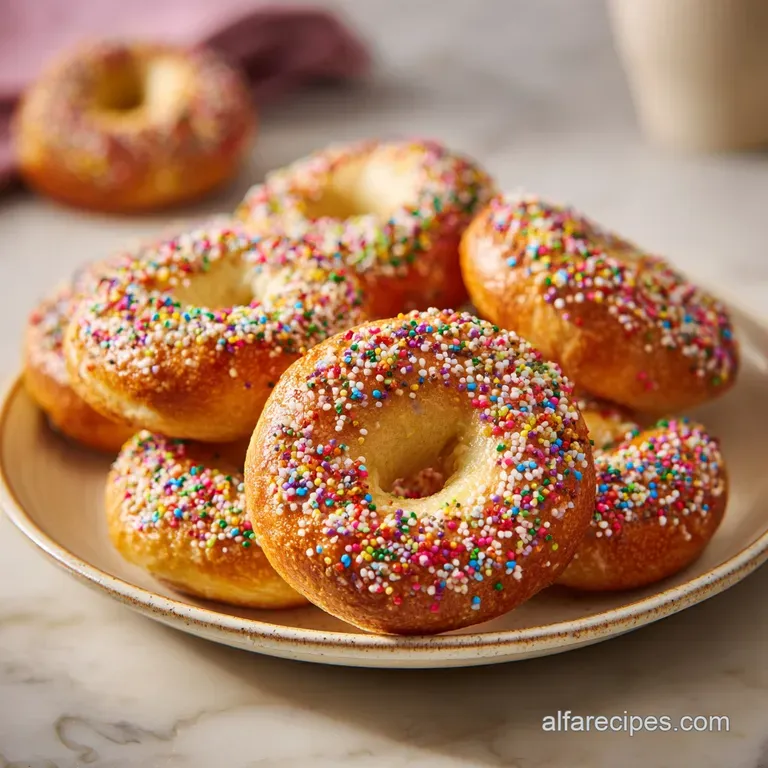
- Time: Active 110 minutes, Passive 20 minutes, Total 130 minutes
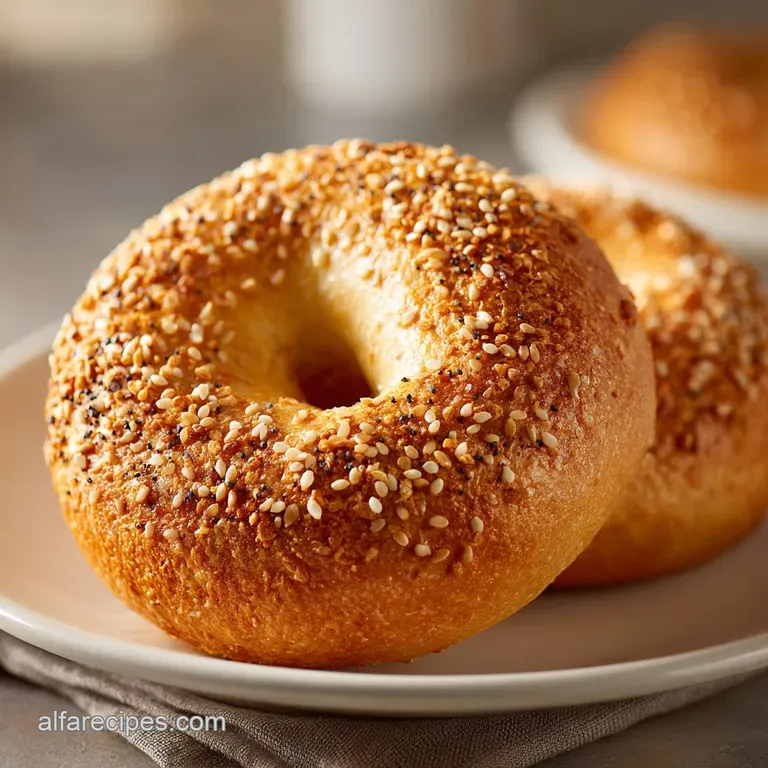
- Flavor/Texture Hook: Shatter crisp mahogany crust with a dense, chewy crumb
- Perfect for: Weekend brunch, creative breakfast spreads, and bread baking enthusiasts
- Perfect Homemade Bagel Recipe For Brunch
- Why These Bagels Are Brilliant
- Analyzing the Essential Components
- Sourcing Your Bagel Ingredients
- Step By Step Bagel Creation
- Troubleshooting Your Bagel Batch
- Scaling Your Bagel Production
- Debunking Popular Bread Myths
- Storage and Waste Solutions
- Recipe FAQs
- 📝 Recipe Card
Perfect Homemade Bagel Recipe For Brunch
Forget everything you have ever heard about bagels being an impossible, multi day project that requires a professional New York kitchen or a wood fired oven. Most people assume that getting that signature "snap" when you bite into the crust is a secret guarded by monks in Brooklyn, but honestly, it is all about one specific stovetop step.
When you pull these out of the oven, the aroma of toasted seeds and sweet malt will literally drift into every corner of your home, making your kitchen smell like the most amazing bakery on the block.
I used to think that a "quick" version or a yogurt based dough would satisfy my brunch cravings, but they always ended up feeling like round bread rolls rather than actual bagels. The truth is, you don't need a miracle to get that authentic texture; you just need to respect the dough's need for a little bath.
We are going to build layers of flavor starting from the yeast bloom all the way to that final, shimmering egg wash. It is creative, it is fun, and it is the only way to truly own your weekend breakfast.
We are aiming for that specific, deep mahogany color and a crust that practically shatters when you slice it open. Inside, you want a tight, dense crumb that can hold up to a massive slab of cream cheese without falling apart.
This homemade bagel recipe is about to become your new obsession because once you hear that first crackle of a fresh bagel cooling on the rack, there is no going back to the grocery store bags.
Why These Bagels Are Brilliant
- Starch Gelatinization: Boiling the dough in alkaline water "sets" the outside starch, which prevents the bagel from rising too much in the oven and creates that legendary chewy texture.
- Low Hydration: By keeping the water to flour ratio low, we ensure the dough remains stiff enough to hold its shape and develop a dense, satisfying bite.
- Malt Deepening: Adding barley malt syrup to the water bath doesn't just add sweetness; it facilitates a beautiful browning process that gives the crust its professional, dark finish.
- Gluten Strength: A long 10 minute knead develops a strong protein network, which is what gives the bagel its characteristic "pull" when you take a bite.
| Cook Method | Total Time | Resulting Texture | Best For |
|---|---|---|---|
| Traditional Boil & Bake | 130 minutes | Shatter crisp crust, dense chewy center | Authentic bakery style results |
| Steam Only Oven | 115 minutes | Softer, thinner crust, more bread like | Quick sandwiches or soft rolls |
| No Boil Method | 100 minutes | Smooth, shiny, but lacks the "snap" | Beginners or very soft bread lovers |
The traditional boil and bake method is the only way to achieve that specific contrast between the exterior and the interior. If you skip the boil, you're essentially just making round bread, which is fine for a sandwich but won't give you that amazing brunch experience we are after.
Analyzing the Essential Components
| Ingredient | Science Role | Pro Secret |
|---|---|---|
| Bread Flour | High protein content (12-14%) creates the structural "chew" and gluten network. | Use flour with at least 12.5% protein for the best bite. |
| Barley Malt Syrup | Provides complex sugars for the crust to caramelize during the short bake. | If you can't find it, honey works, but malt adds a deeper "cereal" flavor. |
| Active Dry Yeast | Fermentation creates tiny CO2 bubbles that lighten the otherwise dense dough. | Always bloom in warm water first to ensure the yeast is alive and kicking. |
| Baking Soda | Increases the pH of the boiling water to accelerate the browning of the crust. | Just a teaspoon transforms the color from pale tan to deep mahogany. |
Sourcing Your Bagel Ingredients
- 500g Bread Flour: High protein flour is non negotiable here if you want that authentic tug. Why this? It provides the necessary gluten for a dense, chewy structure.
- 250ml Warm Water: Keep this between 105°F and 110°F. Why this? This is the "sweet spot" for waking up yeast without killing it.
- 7g Active Dry Yeast: This is exactly one standard packet. Why this? It provides the lift and that classic fermented aroma.
- 20g Granulated Sugar: You can also use honey in the dough. Why this? Feeds the yeast and adds a hint of background sweetness.
- 10g Fine Sea Salt: Don't use coarse salt in the dough; it won't dissolve properly. Why this? It tightens the gluten and balances the overall flavor.
- 30g Barley Malt Syrup: For the boiling water. Why this? This is the secret to that New York style flavor and color.
- 1 tsp Baking Soda: For the boiling water. Why this? It creates an alkaline environment for a superior crust.
- 1 Large Egg: For the wash. Why this? Acts as the "glue" for your toppings and adds shine.
- 2 tbsp Everything Seasoning: Or sesame seeds, poppy seeds, or flaky salt. Why this? Adds texture and a creative flavor punch to every bite.
step-by-step Bagel Creation
- Whisk 250ml warm water, 7g yeast, and 20g sugar in your stand mixer bowl. Let it sit for about 5 to 10 minutes until a thick, foamy cap forms on top. Note: If it doesn't foam, your yeast is likely dead; start over with fresh yeast.
- Add the 500g flour and 10g sea salt to the yeast mixture. Knead using the dough hook for about 10 minutes until the dough is stiff, smooth, and clears the sides. Note: The dough should feel much tougher than pizza or bread dough.
- Place the dough in a lightly greased bowl, cover with a damp cloth, and let it rise for 90 minutes until it has doubled in size and looks puffy.
- Punch the dough down to release air and divide into 8 equal portions of about 100g each. Shape into tight balls, then poke a hole in the center with your thumb and stretch gently until you have a distinct bagel ring.
- Preheat your oven to 425°F (218°C). While that heats, bring 2 quarts of water to a boil in a wide pot with the 30g barley malt syrup and 1 tsp baking soda.
- Boil bagels in batches for 1 minute per side until they look slightly swollen and wrinkled. Remove with a slotted spoon and place on a parchment lined baking sheet.
- Whisk 1 egg with 1 tablespoon of water. Brush the tops of the boiled bagels thoroughly and sprinkle with your chosen seasonings so they stick to the damp surface.
- Bake for 20 minutes until the bagels reach a deep mahogany golden brown color. Transfer them to a wire rack immediately to prevent the bottoms from getting soggy.
Troubleshooting Your Bagel Batch
Why Your Bagels Are Flat
If your bagels look more like pancakes than puffy rings, it is usually an issue with the proofing or the handling. Over proofing the dough during that 90 minute rise can cause the air bubbles to collapse the moment they hit the boiling water.
Also, if you are too aggressive when stretching the holes, you might deflate the structure you worked so hard to build.
| Problem | Root Cause | Solution |
|---|---|---|
| Tough/Rubbery Crust | Boiled for too long | Limit boiling to 60 seconds per side maximum. |
| No Shine on Crust | Skipped the egg wash | Use a full egg whisked with water for a glossy finish. |
| Bland Flavor | Not enough salt or malt | Ensure you use the full 10g of salt in the dough. |
Lumpy or Uneven Texture
This usually happens when the dough isn't kneaded enough. Bagel dough is notoriously low in hydration, which means it takes quite a bit of work to get it smooth. If you stop kneading before that 10 minute mark, the gluten won't be strong enough, and the surface will look pebbly rather than sleek after the boil.
Toppings Falling Off
The most common mistake is waiting too long after boiling to apply the seasonings. You want to brush that egg wash on while the bagels are still slightly tacky from the water bath. If the surface dries out, the seeds have nothing to grip onto.
- ✓ Always use a kitchen scale for the 100g portions to ensure even baking.
- ✓ Ensure the water bath is at a rolling boil before dropping the dough in.
- ✓ Pat the bottom of the boiled bagels on a clean towel before placing on the tray to avoid "puddles."
- ✓ Let the bagels cool for at least 20 minutes before slicing to set the crumb.
- ✓ Don't overcrowd the boiling pot; do 2 or 3 at a time to keep the water temperature steady.
Scaling Your Bagel Production
If you are hosting a massive Sunday brunch, you can easily double this recipe to make 16 bagels. When scaling up, keep your salt and yeast at a 1.5x ratio rather than a full 2x to avoid an overly salty or "yeasty" flavor, but keep the flour and water ratios exact.
You will likely need to work in batches for the kneading process unless you have a professional grade mixer, as 1kg of bagel dough is very heavy.
For a smaller household, you can halve the recipe to make 4 bagels. Just beat one egg, use half for the wash, and save the other half for a quick scramble. The bake time remains the same at 20 minutes, though you should check them at 18 minutes just in case your oven runs hot. For another fun weekend project, you might enjoy making Shortbread Cookies to serve alongside your brunch coffee.
Debunking Popular Bread Myths
- The "New York Water" Secret: Many people claim you can only make great bagels with NYC tap water due to the mineral content. In reality, the boiling technique and high protein flour are 95% of the battle. Your local tap water is perfectly fine.
- Boiling Cooks the Dough: Some think the boil is a cooking step. It actually isn't; it's a surface treatment. The heat of the water gelatinizes the exterior starch, creating a barrier that limits how much the bagel can expand in the oven, which creates the density.
- sugar-free is Better: While you can skip sugar in some breads, the yeast needs that 20g of sugar or honey to activate quickly and provide the CO2 necessary for the rise in such a stiff dough.
Storage and Waste Solutions
Fresh bagels are amazing for about 6 to 12 hours. After that, they start to harden. If you aren't eating them immediately, store them in a sealed plastic bag at room temperature for up to 2 days. For long term storage, slice them first and freeze them for up to 3 months. Topping them off with some No Churn Chocolate Ice Cream later in the evening is a creative way to turn a brunch day into a full weekend celebration!
Don't throw away bagels that have gone slightly stale. You can slice them into thin rounds, toss them with olive oil and garlic salt, and bake them at 350°F (180°C) until crispy to make the best bagel chips you've ever had.
If you have leftover egg wash, whisk it into your morning omelet so nothing goes to waste. The "scraps" of everything seasoning at the bottom of the tray can be saved and used to crust a piece of salmon or chicken for a later meal.

Recipe FAQs
What is the secret to making good bagels?
The secret is the intensive 10-minute kneading process. Developing a stiff, smooth dough that passes the windowpane test ensures the bagel maintains its iconic chewy structure during the boiling and baking stages.
Are bagels boiled before they are baked?
Yes, boiling is essential for the crust and texture. Boiling in water mixed with barley malt syrup and baking soda for one minute per side gelatinizes the starches, creating that signature shiny, chewy exterior before the 20-minute bake at 425°F.
What is the secret ingredient in a bagel?
Barley malt syrup is the traditional flavor component. Adding this to the boiling water provides a distinct depth of flavor and helps achieve that deep mahogany golden brown color during the final bake.
What flour is best for bagels?
Bread flour is preferred, though all-purpose flour works. Because bread flour has a higher protein content, it creates a stronger gluten network; if you enjoyed the crumb structure here, you can apply similar Recipe with White Bread to other yeasted doughs.
Is it true that I should use a high heat oven for bagels?
Yes, baking at 425°F is mandatory. This high temperature is required to quickly set the exterior crust while the center finishes cooking, preventing the bagel from becoming flat or dense.
How to ensure the yeast is active before starting?
Whisk the yeast with warm water and sugar, then let it sit for 5 to 10 minutes. You must wait for a thick, foamy cap to form; if this layer does not appear, your yeast is likely inactive and will result in a failed rise.
How to store bagels so they stay fresh?
Keep them in a sealed plastic bag at room temperature for up to 2 days. For any leftovers beyond that window, slice the bagels immediately and freeze them for up to 3 months to preserve their quality.
Homemade Bagel Recipe
Ingredients:
Instructions:
Nutrition Facts:
| Calories | 256 kcal |
|---|---|
| Protein | 8.8 g |
| Fat | 1.4 g |
| Carbs | 51.2 g |
| Fiber | 1.7 g |
| Sugar | 4.6 g |
| Sodium | 489 mg |
