Dump Bake Dinner Casserole with Chicken: Creamy and Cheesy
- Time: Active 10 minutes, Passive 45 mins, Total 55 mins
- Flavor/Texture Hook: Savory, cheesy base with a buttery cracker shatter
- Perfect for: Stressful weeknights or meal prep Sunday
- Dump Bake Dinner Casserole with Chicken Made Easy Peasy
- Why This Casserole Stays Creamy
- The Science of Hearty Ingredients
- Selecting the Right Building Blocks
- Simple Equipment for Easy Prep
- Bringing the Whole Dish Together
- Professional Tips to Avoid Pitfalls
- Smart Adaptations for Every Diet
- Feeding a Crowd Easily
- Busting Common Casserole Myths
- Family Secrets for Meal Preservation
- Ways to Serve and Enjoy
- Very High in Sodium
- Recipe FAQs
- 📝 Recipe Card
Dump Bake Dinner Casserole with Chicken Made Easy Peasy
I remember the first time I pulled this out of the oven. I had just come home from a rainy soccer practice with the kids, and the kitchen felt like a disaster zone. I was honestly skeptical that tossing raw pasta and uncooked chicken into a dish would result in anything other than a soggy mess.
But as the kitchen filled with the scent of toasted butter and garlic, my doubts started to melt away.
When I finally peeled back the foil, the sauce was bubbling and the pasta had perfectly soaked up all that seasoned broth. It was a moment of pure kitchen magic. This Dump Bake Dinner Casserole with Chicken Made Easy Peasy has since become my secret weapon for those nights when I just can't face a pile of pots and pans.
It's about real life, where we need something hearty that doesn't require a culinary degree or three hours of standing over a stove.
We’re going to focus on the heavy cream here. It’s the hero because it provides the fat necessary to keep the chicken thighs tender while acting as the base for a sauce that feels way more fancy than a "dump" recipe has any right to be.
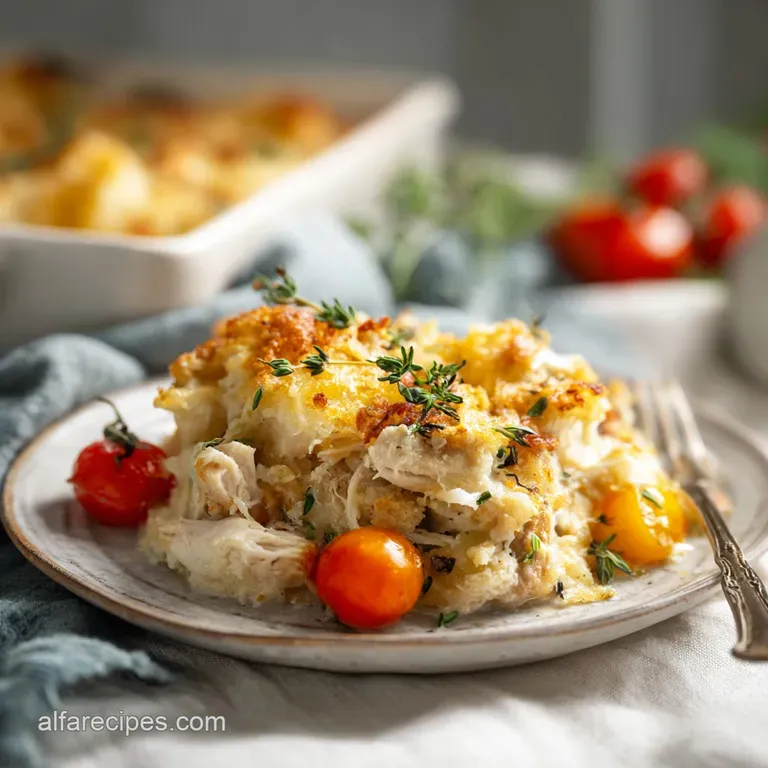
You’ll get that velvety mouthfeel in every bite, contrasted by a topping that provides a distinct, satisfying crunch.
Why This Casserole Stays Creamy
To understand why this method works so well, we have to look at how the pasta behaves when it isn't boiled first. It's actually a very clever bit of kitchen logic that saves us time and effort.
- Liquid Absorption: The raw rotini acts like a sponge, drawing in the chicken broth and heavy cream to soften while simultaneously thickening the sauce with its own surface starch.
- Steam Confinement: Tightly sealing the dish with foil creates a high pressure steam environment that cooks the 1.5 lbs of chicken thighs evenly without letting the moisture escape.
- Fat Stabilization: Using a combination of cream of chicken soup and heavy cream creates a stable emulsion that won't "break" or become oily under the high heat of the 375°F oven.
- Thigh Resilience: Chicken thighs contain more connective tissue than breasts, which means they stay juicy during the 45 mins of cooking instead of turning stringy.
| Chicken Thickness | Internal Temp | Rest Time | Visual Cue |
|---|---|---|---|
| 1 inch cubes | 165°F | 5 mins | No pink in center |
| 1.5 inch chunks | 165°F | 5 mins | Juices run clear |
| Shredded (after cook) | 165°F | 3 mins | Opaque and tender |
The balance of liquids is the most important part of this whole equation. If you have too much liquid, you end up with soup; too little, and you’re chewing on crunchy pasta. By using exactly 2 cups of liquid (broth and cream) for 2 cups of pasta, we hit that sweet spot where every drop is used to create a silky finish.
The Science of Hearty Ingredients
Every component in this dish has a specific job to do. We aren't just throwing things in a pan; we are building layers of flavor and texture that work together to satisfy a hungry family.
| Ingredient | Science Role | Pro Secret |
|---|---|---|
| Heavy Cream | Provides fat for a velvety sauce | Use room temp to prevent curdling |
| Rotini Pasta | Releases starch to thicken the base | Ridges are vital for holding sauce |
| Chicken Thighs | Adds moisture and savory depth | Trim excess fat for a cleaner bite |
| Ritz Crackers | Adds a salty, fatty crunch | Don't over crush into a fine powder |
Adding that half teaspoon of smoked paprika might seem small, but it's what gives the sauce its golden hue and a tiny hint of wood fired flavor. It cuts through the richness of the 2 cups of shredded cheddar cheese perfectly. This balance is what keeps the dish from feeling too heavy or one note.
Selecting the Right Building Blocks
For this recipe, I’ve found that sticking to the exact measurements is the best way to ensure the pasta cooks through. I once tried to eye ball the broth, and let's just say we had "al dente" that was a bit too "dente."
- 1.5 lbs chicken thighs: Cut these into 1 inch cubes so they cook at the same rate as the pasta.
- 2 cups uncooked rotini pasta: Use a sturdy brand; thin pasta can turn to mush.
- 1 bag (340g) frozen broccoli: Thaw this first and pat it dry so it doesn't leak extra water into your sauce.
- 1 can (10.5 oz) cream of chicken soup: This acts as our thickener and flavor base.
- 1 cup heavy cream: This is for that velvety, rich finish we love.
- 1 cup low sodium chicken broth: Controls the salt level while providing hydration.
- Seasoning: 1 tbsp garlic powder, 1 tsp onion powder, and 0.5 tsp smoked paprika.
- 2 cups shredded sharp cheddar: Freshly shredded melts so much better than the bagged stuff.
- 1 cup crushed buttery crackers: I prefer the classic Ritz style for that nostalgic flavor.
- 4 tbsp unsalted butter: Melted, to bind the cracker topping.
Chef's Tip: If you’re out of rotini, penne is a great substitute. Just avoid long noodles like spaghetti, as they tend to clump together in a dump bake and won't cook evenly in the center.
Simple Equipment for Easy Prep
You don't need much to get this on the table. In fact, that's the whole point! I usually grab my favorite 9x13 inch ceramic baking dish because it holds heat so evenly, but a standard glass Pyrex works just as well.
You’ll also need a large mixing bowl to whisk the liquid components together. Don't try to mix the soup and cream directly in the baking dish; you’ll end up with clumps of soup that don't distribute properly. A sturdy whisk or even a large fork will do the trick to get that mixture uniform.
Finally,, make sure you have some heavy duty aluminum foil. A tight seal is non negotiable here because that steam is what actually "boils" the pasta.
If you're looking for other ways to use your chicken thighs, you might want to try a Buffalo Chicken Dip for your next game day it uses similar flavor profiles but in a snackable format!
Bringing the Whole Dish Together
Preparing the Foundation
Preheat your oven to 375°F. In your mixing bowl, whisk the cream of chicken soup, heavy cream, chicken broth, garlic powder, onion powder, and smoked paprika. Note: Whisking first ensures the spices don't clump in one corner of the dish.
Layering the Ingredients
Spread the 1.5 lbs of raw chicken cubes and 2 cups of uncooked rotini evenly across the bottom of your 9x13 dish.
Hydrating the Base
Pour the liquid mixture over the chicken and pasta. Use a spoon to push down any stray noodles. Note: Every piece of pasta must be submerged to cook properly.
Adding the Greens
Scatter the 340g of thawed and dried broccoli florets over the top of the liquid.
The Steam Phase
Cover the dish tightly with aluminum foil. Bake for 30 minutes until the pasta is tender and the chicken is nearly cooked.
The Stir and Top
Remove the foil and give the mixture a very gentle stir. This redistributes the starch and ensures the sauce is creamy.
Adding the Crunch
Sprinkle the 2 cups of shredded cheddar and 1 cup of crushed crackers over the surface.
The Butter Drizzle
Evenly drizzle the 4 tbsp of melted butter over the cracker crumbs.
That Final Golden Glow
Return the dish to the oven, uncovered, for 15–20 minutes until the topping is golden brown and sizzle worthy.
Checking for Doneness
The chicken should reach an internal temperature of 165°F. Let the dish sit for 5 minutes before serving to allow the sauce to set.
Professional Tips to Avoid Pitfalls
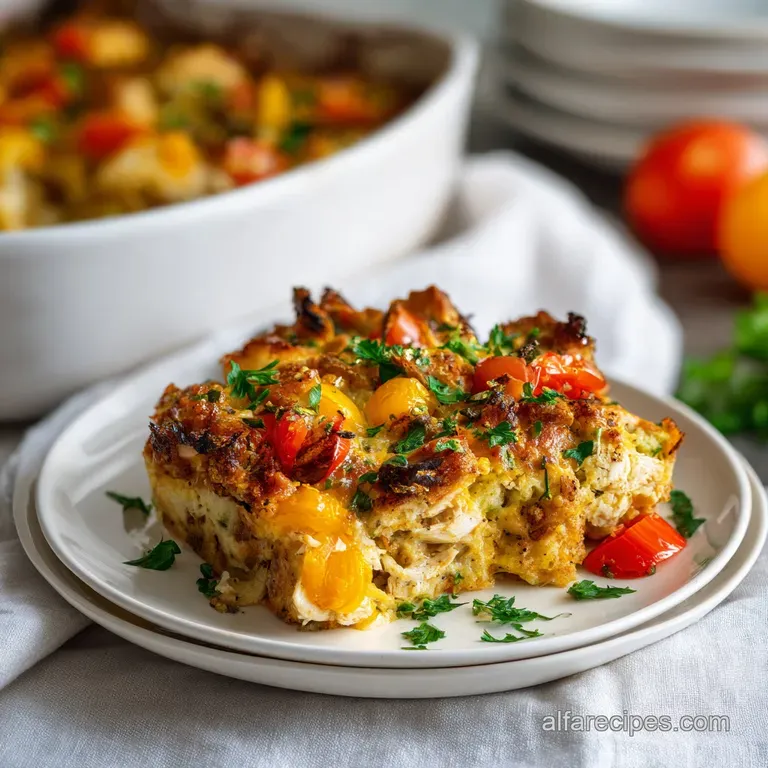
One of the biggest mistakes people make with dump and bake casseroles is not covering the dish tightly enough. If steam escapes, your pasta will stay hard, and your chicken will dry out. I always double check the corners of my foil to make sure they are crimped tight against the edge of the pan.
Preventing a Watery Foundation
If your broccoli is still icy when it goes in, it will release water as it thaws, which can thin out your velvety sauce. Always pat the florets dry with a paper towel after thawing.
If you find your sauce is still a bit thin, don't worry it thickens significantly as it cools for those first 5 minutes on the counter.
| Problem | Root Cause | Solution |
|---|---|---|
| Crunchy Pasta | Not enough liquid or poor seal | Add 1/4 cup broth and bake longer |
| Dry Chicken | Using breasts instead of thighs | Stick to thighs or reduce cook time |
| Greasy Sauce | Pre shredded cheese oils | Use block cheese and grate it yourself |
Common Mistakes Checklist
- ✓ Pat the chicken completely dry before cubing to ensure the spices stick.
- ✓ Ensure every single rotini noodle is covered by the liquid before the first bake.
- ✓ Don't skip the 5 minute rest period; it’s when the sauce truly comes together.
- ✓ Use a heavy duty foil to prevent tears that allow steam to escape.
- ✓ Thaw the frozen broccoli completely to avoid adding excess water to the dish.
Another tip I've learned is that the type of cracker matters. While some people like breadcrumbs, Ritz crackers have a higher fat content which leads to a much better "shatter" when you bite into them. For a completely different flavor profile on another night, you could try an Easy Ground Beef Stir Fry which also keeps things to a single pan but uses a totally different set of pantry staples.
Smart Adaptations for Every Diet
This recipe is incredibly flexible. If you’re looking to make a healthy dump and bake chicken recipe, you can swap the heavy cream for whole milk and use a low-fat cream of chicken soup. The sauce won't be quite as velvety, but it still tastes like a warm hug in a bowl.
You can also double the broccoli to add more fiber and volume without many extra calories.
Spicy Taco Style Swap
If you want to turn this into a chicken taco dump casserole, it's easy peasy. Swap the cream of chicken soup for a jar of mild salsa and replace the garlic and onion powder with a packet of taco seasoning. Use pepper jack cheese instead of cheddar and top with crushed tortilla chips instead of Ritz crackers.
It’s a total crowd pleaser for Friday nights.
Lowering the Carbs
For those watching their carb intake, you can replace the rotini with cauliflower florets. Since cauliflower doesn't soak up liquid like pasta does, you should reduce the chicken broth by half. This keeps the dish from becoming a soup while still giving you that cheesy, creamy comfort.
Feeding a Crowd Easily
Scaling this recipe is straightforward, but there are a few rules to follow so the physics of the bake stay on your side. If you want to double the recipe for a big family gathering, I highly recommend using two separate 9x13 dishes rather than one giant deep pan.
When you crowd too much into one dish, the center takes much longer to reach 165°F, which can lead to the edges becoming overcooked and mushy. If you do decide to double the spices, only go to 1.5x the amount of salt and paprika at first, then taste the sauce during the stir and top phase.
Spices can become overwhelming when doubled exactly in large casseroles. For smaller households, you can easily halve everything and use an 8x8 inch square pan, reducing the initial covered bake time by about 5 minutes.
Busting Common Casserole Myths
One major myth is that you have to pre cook the pasta to get a good texture. In reality, cooking the pasta in the sauce allows it to absorb the flavors of the chicken and spices, making it much more flavorful than if it were boiled in plain water.
It’s not a shortcut that hurts the dish; it’s actually a technique that improves it.
Another misconception is that chicken breasts are always "better" or "healthier." In a long bake like this, chicken breasts often become dry and "woody" in texture. The fat in the thighs not only keeps the meat tender but also adds a necessary richness to the sauce that makes this feel like a million dollar chicken casserole recipe.
Family Secrets for Meal Preservation
Leftovers of this casserole are honestly something I look forward to the next day. The flavors have more time to meld, and the sauce stays remarkably stable.
- Storage: Keep it in an airtight container in the fridge for up to 3 to 4 days.
- Freezing: You can freeze the assembled, unbaked casserole (minus the cracker topping) for up to 2 months. Thaw it in the fridge overnight before baking as directed.
- Reheating: The best way to reheat is in the oven at 350°F covered with foil. This prevents the crackers from burning while the center warms up. If using a microwave, add a splash of milk to loosen the sauce back up.
- Zero Waste: If you have leftover stems from the broccoli, don't toss them! Peel the woody outer layer, dice the tender center, and toss them right into the mix with the florets. They add a great crunch and extra nutrients.
Ways to Serve and Enjoy
When I serve this, I like to put the whole dish right in the middle of a crowded table. There’s something so comforting about everyone scooping out their own portion of cheesy goodness.
To balance out the richness of the heavy cream and cheddar, I usually serve this with a very simple side salad with a bright lemon vinaigrette. The acidity of the lemon cuts right through the savory sauce.
If you want a bit of a budget win, you can often find large packs of chicken thighs on sale. I buy them in bulk, cube them all at once, and freeze them in 1.5 lb portions so I’m always ready for a dump bake night.
It’s these little real life strategies that make feeding a family feel less like a chore and more like a way to bring everyone together. Whether it’s a standard Tuesday or a "we just got home from vacation and have nothing in the fridge" kind of night, this dish always delivers that hearty, no fuss comfort we all need.

Very High in Sodium
1098 mg 1098 mg (48% 48%)
The American Heart Association recommends limiting sodium intake to no more than 2,300mg per day, with an ideal limit of about 1,500mg for most adults.
Tips to Reduce Sodium in Your Creamy Broccoli Chicken Pasta
-
Swap Cream of Chicken Soup-25%
Replace the standard cream of chicken soup with a low-sodium version. This is often the biggest contributor to sodium in creamy casseroles.
-
Choose Lower Sodium Cheese-15%
Opt for a reduced sodium sharp cheddar cheese. While still flavorful, it will significantly cut down on added sodium compared to regular cheddar.
-
Rethink the Buttery Crackers-10%
Use unsalted crackers or even skip the crushed crackers topping altogether. If you use crackers, look for low-sodium varieties and crush them yourself.
-
Boost Flavor with Herbs & Spices
Continue to use flavor enhancers like garlic powder, onion powder, and smoked paprika. Fresh herbs like parsley or chives can also add freshness without sodium.
-
Use Unsalted Butter
Ensure the butter you are using is explicitly labeled as unsalted to avoid any unnecessary sodium.
Recipe FAQs
Why is it necessary to cover the dish with foil for the first 30 minutes?
This step is critical for steaming the pasta and chicken inside the baking dish. By trapping the moisture, you ensure the rotini cooks through without drying out, creating a cohesive sauce base.
Is it true that I can use quick cook pasta instead of rotini?
No, this is a common misconception. Quick cook pasta will turn into mush during the 45-minute total bake time; stick to standard rotini to maintain the proper texture.
How to ensure the broccoli does not make the casserole watery?
Thaw the florets completely and pat them dry with paper towels before adding them to the dish. Removing excess moisture prevents the sauce from thinning out during the baking process.
How to know for certain when the chicken is fully cooked?
Insert a digital meat thermometer into the thickest piece of chicken to verify an internal temperature of 165°F. This ensures safety while maintaining the juicy texture of the chicken thighs.
Can I prepare this meal using a different protein?
Yes, you can swap chicken for other proteins if you adjust for cook times. If you enjoyed the convenience of this one-pot method, see how we apply similar one-pan searing techniques in our turkey and potato skillet.
Why is the 5-minute rest period important?
It allows the liquid components to thicken and bind to the pasta. If you serve immediately, the sauce may appear slightly separated, but waiting ensures a creamy, uniform consistency.
How to prevent the cracker topping from burning?
Keep a close eye on the oven during the final 15 20 minutes once the foil is removed. The high fat content in the buttery crackers helps them brown quickly, so pull the dish as soon as they reach a golden hue.
Chicken Dump Bake Casserole

Ingredients:
Instructions:
Nutrition Facts:
| Calories | 949.6 kcal |
|---|---|
| Protein | 43.1 g |
| Fat | 58.2 g |
| Carbs | 63.7 g |
| Fiber | 3.8 g |
| Sugar | 5.1 g |
| Sodium | 1098.5 mg |
